Choosing between a 100W, 150W, and 200W jewelry laser welder sounds simple: more watts should mean a better machine.
For jewelry repair, that is not necessarily true.
A 200W machine provides more power headroom, but a jeweler repairing fine chains and small prongs may never use it. At the same time, a busy repair shop working with platinum rings, thicker shanks, and repeated daily jobs may quickly outgrow a lighter system.
The practical difference is:
100W is usually best for lighter precision repairs and lower-volume benches.
150W offers the best overall balance for most professional jewelry repair shops.
200W is most useful for heavier jewelry sections, demanding materials, and higher daily workloads.
But wattage should never be considered alone. Pulse energy, pulse width, spot size, frequency, cooling, microscope quality, and operator control can matter just as much.
100W vs. 150W vs. 200W at a Glance
Power | Best For | Main Advantage | Main Trade-Off |
|---|---|---|---|
100W | Fine repair, chains, small prongs, light ring work | Precision and lower investment | Less headroom for heavier work |
150W | General professional jewelry repair | Best balance of control and versatility | Higher cost than an entry system |
200W | Thick rings, platinum, heavier repairs, high-volume shops | More power reserve and flexibility | Higher investment may be unnecessary for light work |
For many repair shops, 150W is the practical middle ground because it can handle delicate work while providing enough reserve for a broader range of daily repairs.
Does More Wattage Mean Better Jewelry Welding?
No.
Rated power tells you only part of what a jewelry laser welder can do.
Jewelry laser welding is a pulsed process. The operator controls how energy is delivered through parameters such as pulse energy, pulse width, frequency, and spot size.
Two jewelry laser welding machines with the same rated wattage can therefore behave very differently.
A well-designed 100W system with good pulse control may perform better on delicate repairs than a poorly controlled 200W machine. Likewise, a professional 200W system may provide much better penetration and stability on heavier work without forcing the operator to run at maximum settings.
This is why buyers should think of wattage as available capacity, not as a fixed welding intensity.
You do not have to use all 200W simply because the machine can provide it.
When Is a 100W Jewelry Laser Welder Enough?
A 100W jewelry laser welder can be an excellent choice for independent bench jewelers and small repair shops whose work is mainly light and precise.
Typical jobs include fine chain repair, small jump rings, earring posts, minor prong rebuilding, porosity filling, thin ring repairs, and other small localized welds.
For this type of work, control is usually more important than maximum power.
A jeweler needs to position a small weld accurately, add tiny amounts of filler wire, and avoid putting unnecessary heat into the surrounding structure.
A 100W machine can therefore make more sense than paying for capacity that will rarely be used.
It is especially suitable for shops where laser welding complements traditional soldering rather than replacing a large share of daily repair work.
The Trade-Off
The limitation appears when the shop begins taking on thicker ring shanks, heavier platinum pieces, larger repairs, or a higher number of jobs each day.
The machine may still complete those repairs, but the operator may need additional passes or spend more time building the weld.
If your workload is expected to expand quickly, the price difference between 100W and 150W deserves careful consideration.

Why Is 150W Often the Best All-Round Choice?
For many professional repair shops, 150W provides the most useful balance between precision and power reserve.
It can still be adjusted for delicate chain, prong, and stone-adjacent work while giving the operator more flexibility when moving into larger ring repairs, thicker components, platinum, or repeated daily laser welding.
This matters in a repair shop because the workload is rarely identical from one day to the next.
One customer may bring in a thin gold chain. The next may need a platinum ring resized. Another may require a worn prong to be rebuilt or a crack filled in a heavier shank.
A 150W machine gives the operator room to handle this mixed workload without automatically moving into the highest power category.
It is therefore a strong fit for jewelry stores bringing outsourced repairs in-house, active bench jewelers, custom jewelry studios, and repair businesses expecting regular daily use.
The Trade-Off
If almost all of your work consists of light chains and simple repairs, the additional capacity may not generate enough value to justify the higher purchase price.
Conversely, if thick platinum, heavy rings, or production work make up a large share of your workload, moving directly to 200W may provide a better long-term fit.
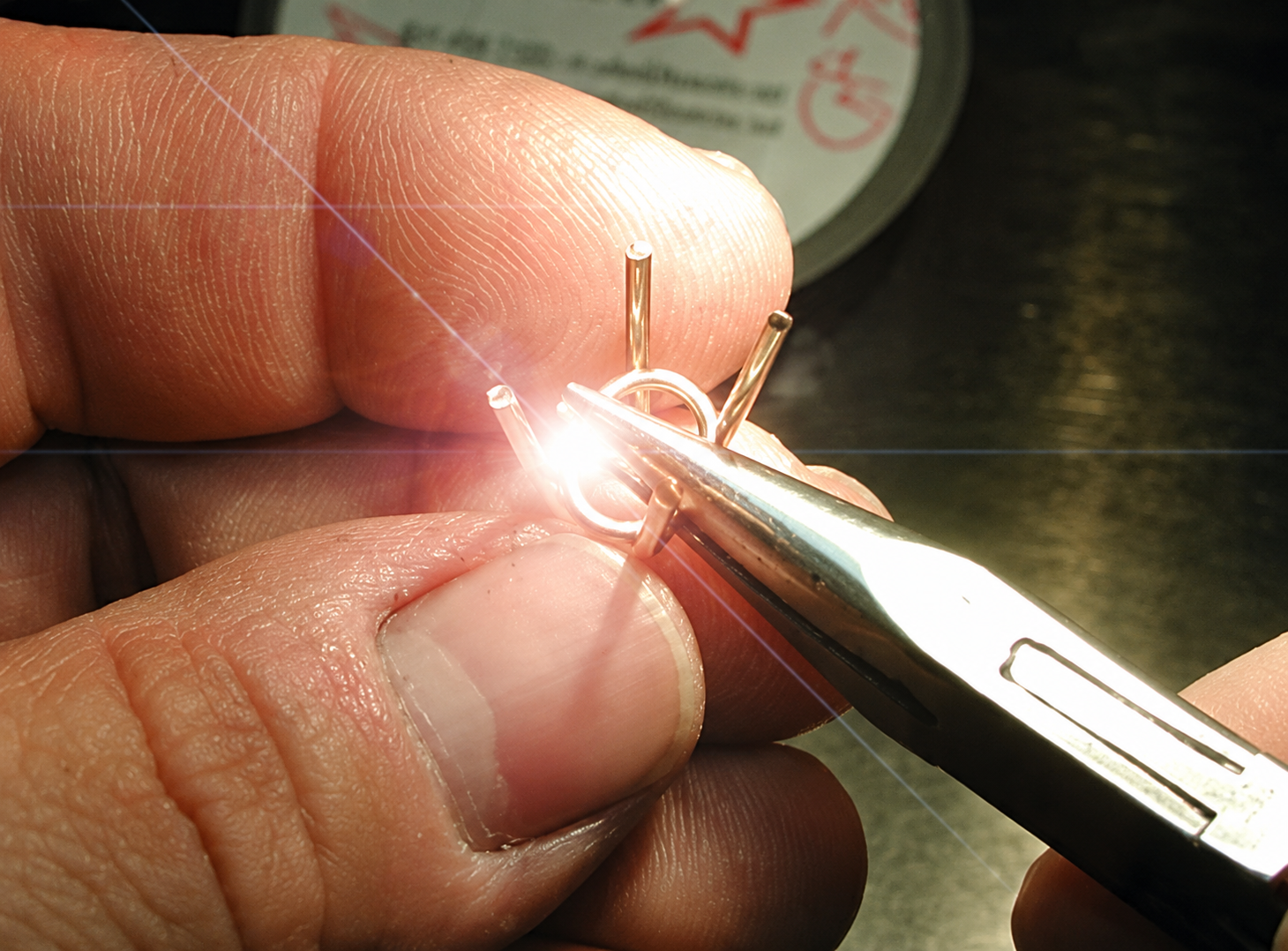
When Should You Choose a 200W Jewelry Laser Welder?
A 200W laser welder for jewelry becomes more attractive when the shop regularly works at the demanding end of jewelry repair.
This may include thick ring shanks, substantial prong rebuilding, larger cast pieces, platinum jewelry, heavier assemblies, repeated porosity filling, and higher-volume production or repair work.
The main advantage is not that every weld should be performed at higher power.
It is power reserve.
Instead of operating a smaller system near its upper capability on demanding jobs, the jeweler has additional room to adjust energy according to the joint.
That can be valuable in a busy workshop where the machine must switch repeatedly between light and heavy applications.
A 200W system can also be worth considering when the price difference from a 150W configuration is relatively small and the business already expects its repair volume to increase.
The Trade-Off
More capacity does not automatically produce better delicate repairs.
A 200W machine still needs good control over pulse energy, pulse width, frequency, and spot size.
For a solo jeweler completing occasional chain, prong, and light ring repairs, the additional investment may simply buy capacity that remains unused.

How Does the Metal Affect Your Power Choice?
The type of metal matters almost as much as the size of the jewelry repair.
Gold
Gold is one of the most common materials handled by jewelry laser welders.
For fine gold repair, a 100W system may provide sufficient capability. Shops working across a broader mix of gold jewelry usually benefit from 150W because it provides more flexibility for different thicknesses and repair types.
A 200W system becomes more useful when heavier rings, thick castings, or higher production volume are involved.
Silver
Silver can be more demanding because it conducts heat rapidly and reflects a significant amount of laser energy.
That does not mean every silver repair requires a 200W machine.
It means buyers planning to work frequently with silver should pay closer attention to pulse energy, beam control, and the supplier's real sample-welding results, rather than choosing based only on the rated wattage.
A machine that performs beautifully on gold should not automatically be assumed to perform equally well on silver.
Platinum
Platinum repair can benefit from greater energy reserve, particularly on substantial ring shanks and heavier sections.
For light work, 100W or 150W may still be sufficient depending on the machine and pulse capability.
For a repair shop handling platinum frequently, however, 150W or 200W usually provides a more useful operating range.
The correct choice should be confirmed through sample welding on representative platinum pieces.
What About Repairs Near Gemstones?
This is an area where buyers should be especially careful about choosing based on wattage.
A lower-power machine is not automatically safe around gemstones, and a higher-power machine is not automatically dangerous.
The actual risk depends on where the laser is aimed, the pulse settings, the distance from the stone, the metal structure, and the gemstone itself.
Diamonds, sapphires, emeralds, opals, pearls, treated stones, and fracture-filled gemstones do not react to heat or laser exposure in the same way.
The advantage of a jewelry laser welder is that it concentrates the weld into a small area rather than heating the entire piece.
For prong rebuilding and other repairs close to stones, fine spot-size control and adjustable pulse energy are usually more important than whether the machine says 100W or 200W on the specification sheet.
When stone stability is uncertain, removal may still be the safest option.
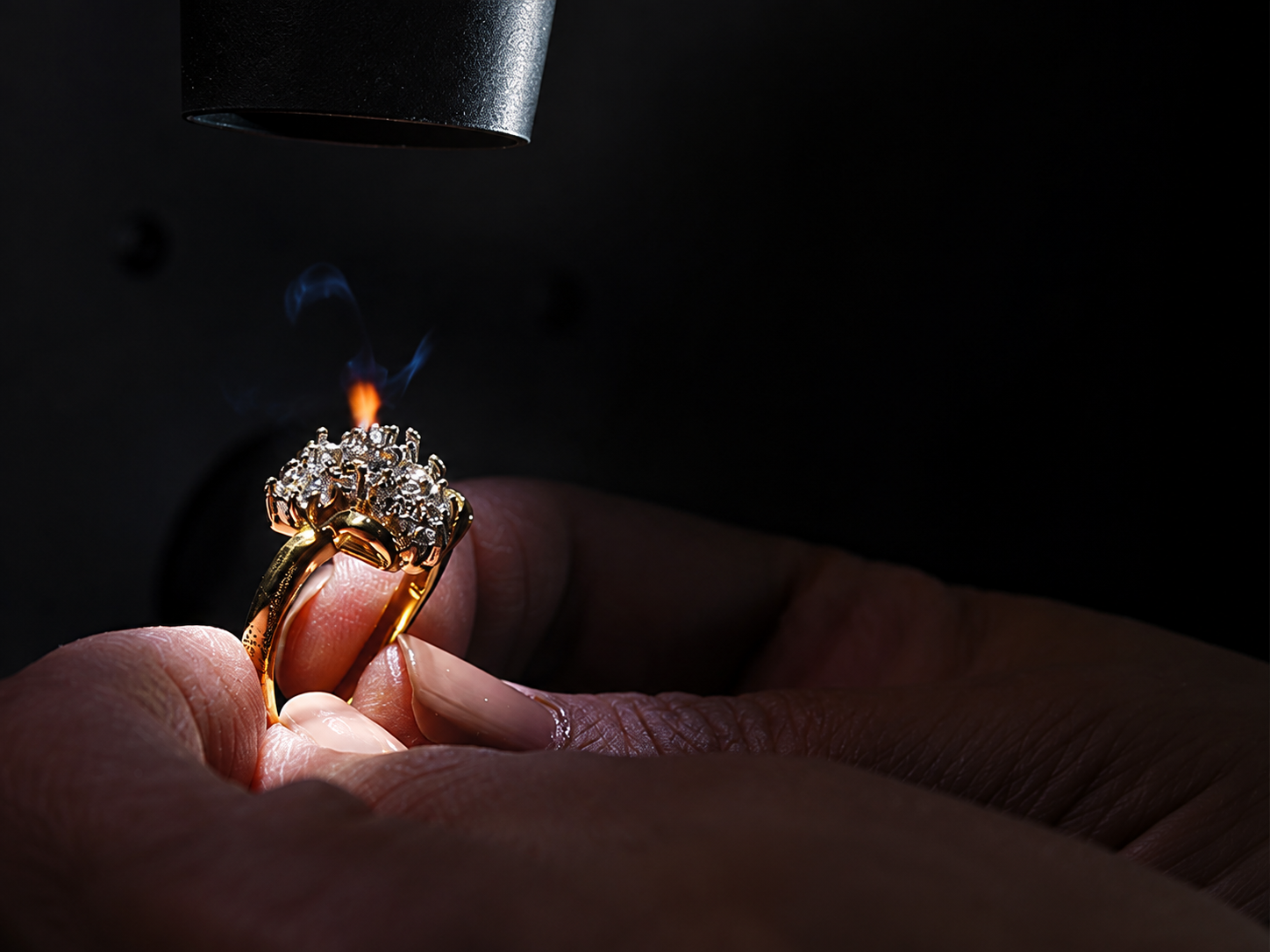
Power Is Not the Only Specification That Matters
This is one of the biggest mistakes buyers make.
Three jewelry welding machines labeled 150W can produce very different results.
Before choosing a machine, compare the complete welding system.
Pulse energy affects how much energy can be delivered into an individual weld and is particularly important when comparing heavier applications.
Pulse width controls how long the energy acts on the metal and helps the operator balance penetration against heat input.
Spot size determines how tightly the energy is concentrated. A wider adjustable range makes it easier to move between fine repair and larger joints.
Frequency affects how quickly repeated pulses can be delivered and becomes increasingly important during repetitive work.
Cooling affects how consistently the machine can operate through longer sessions.
The microscope and viewing system directly influence weld placement, operator comfort, and the ability to work on extremely small components.
A machine with slightly lower rated wattage but better control, optics, cooling, and support may therefore be the better professional tool.
Which Power Is Best for Your Repair Shop?
A simple way to choose is to look at the work that makes up most of your current repair volume.
Choose 100W when most jobs involve fine chains, small components, light ring repairs, and occasional laser welding.
Choose 150W when your workload is mixed and includes chains, prongs, ring resizing, gold, silver, platinum, and regular daily repair.
Choose 200W when thick jewelry, platinum, heavier repair, demanding welding, or high daily volume represents a significant part of your business.
Do not select 200W only because you may someday need more power.
But do not buy 100W purely to save money when the work already sitting on your bench regularly requires more capacity.
Choose for the jobs you actually perform, with enough reserve for realistic growth.
100W, 150W or 200W: Which Offers the Best Value?
For a small bench jeweler handling primarily delicate repair work, 100W can provide the best value because there is little benefit in paying for unused power.
For most active jewelry repair shops, 150W is often the strongest value point. It provides enough flexibility to move between fine precision work and more demanding everyday repairs without immediately stepping into the highest configuration.
For high-volume repair centers, custom jewelry manufacturers, or businesses working frequently with substantial platinum and thicker components, 200W can justify the higher investment through additional capacity.
The cheapest option is therefore not always 100W.
And the best option is not automatically 200W.
Value comes from how much of the machine's capability you actually use.

What Should You Ask the Supplier Before Buying?
Instead of asking only, “How many watts is the jewelry welder?”, ask the supplier to weld the jewelry you actually handle.
Provide representative samples such as a fine chain, worn prong, gold ring, platinum shank, silver component, and one of your more difficult repairs.
Compare the weld penetration, porosity, color match, amount of finishing required, heat discoloration, and ease of parameter adjustment.
Then confirm the pulse energy, pulse-width range, spot-size range, frequency, microscope, argon system, cooling configuration, warranty, spare parts, and training.
The best power recommendation comes from your repair samples—not from a generic wattage chart.
Conclusion
There is no universal best wattage for jewelry laser welding.
A 100W jewelry laser welder is a strong choice for light, precision-oriented repair work and smaller repair volumes.
A 150W system provides the best overall balance for many professional jewelry repair shops because it combines fine control with enough reserve for a broader range of rings, prongs, chains, gold, silver, and platinum work.
A 200W machine makes the most sense when heavier jewelry, demanding materials, or high daily workloads justify the additional capacity.
Most importantly, do not judge a jewelry laser welder by wattage alone.
The right machine is the one that delivers the pulse control, spot size, cooling stability, viewing accuracy, and welding capacity required by the jewelry already coming across your bench.
Not sure whether 100W, 150W, or 200W fits your repair work?
Send JewelryLaserNova photos or samples of your typical jewelry, along with the metals you work with, daily repair volume, and your most difficult applications. The team can perform sample welding, compare suitable power configurations, and recommend a machine based on your actual repairs rather than simply selling you the highest wattage available.