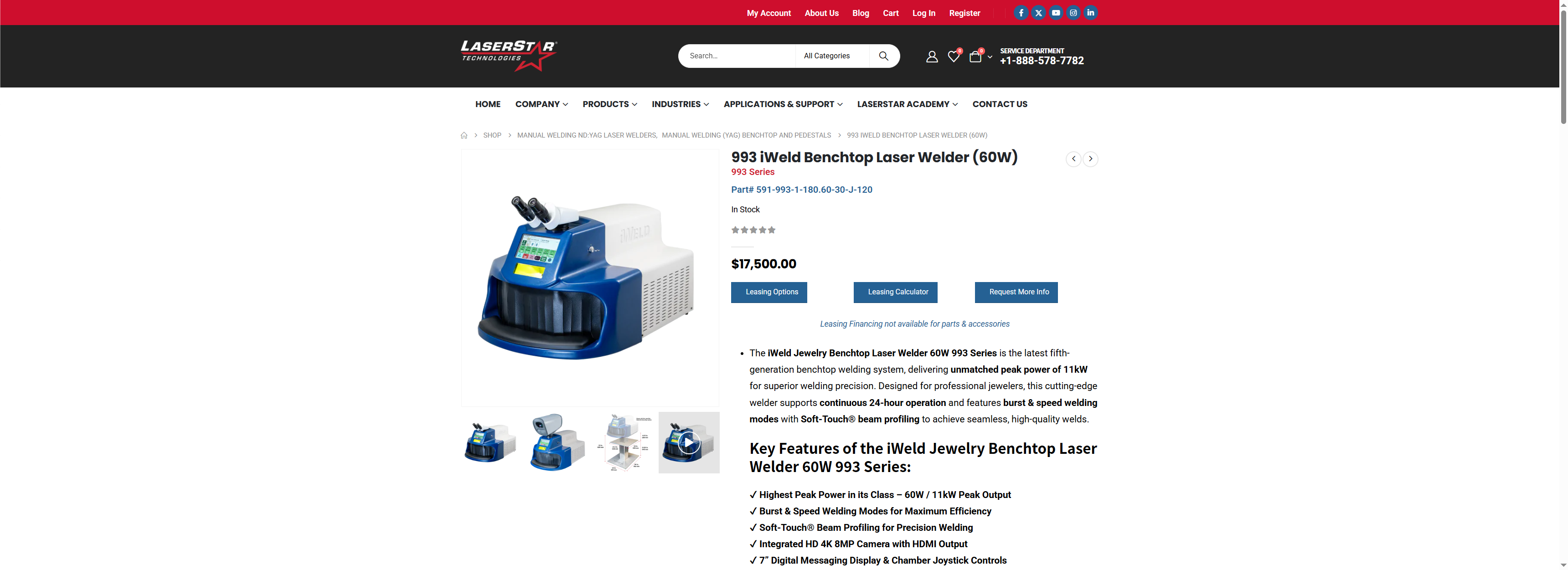
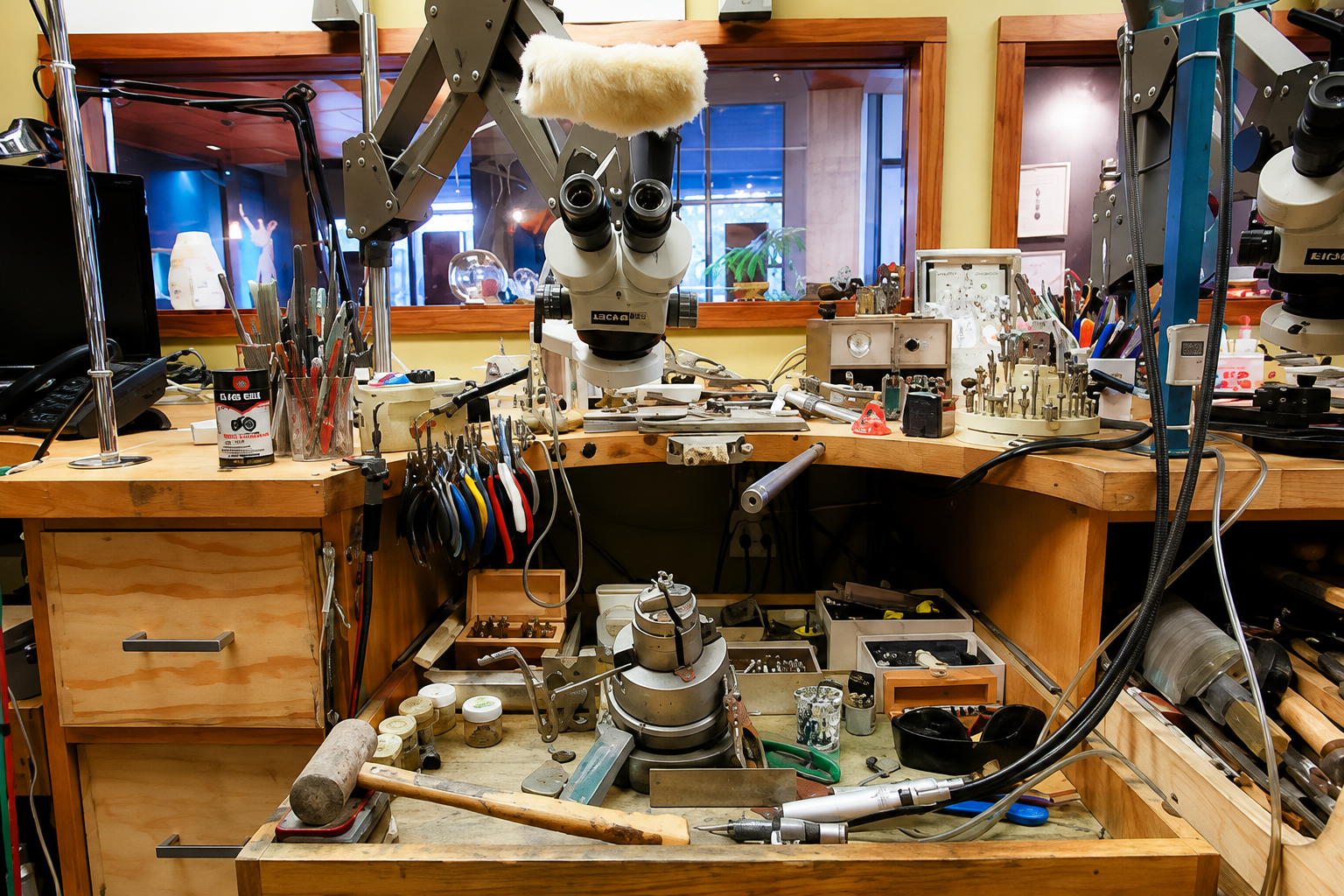
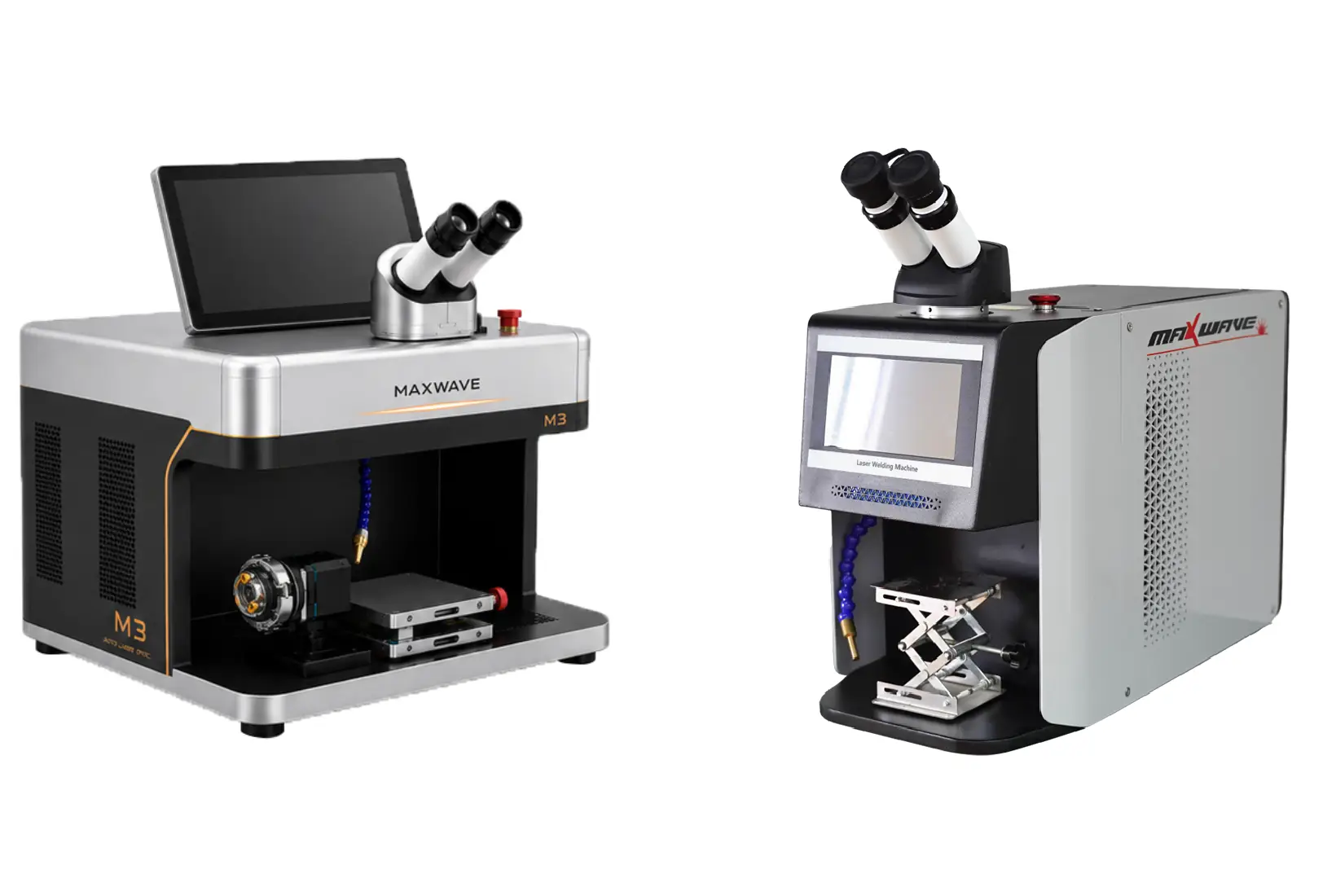
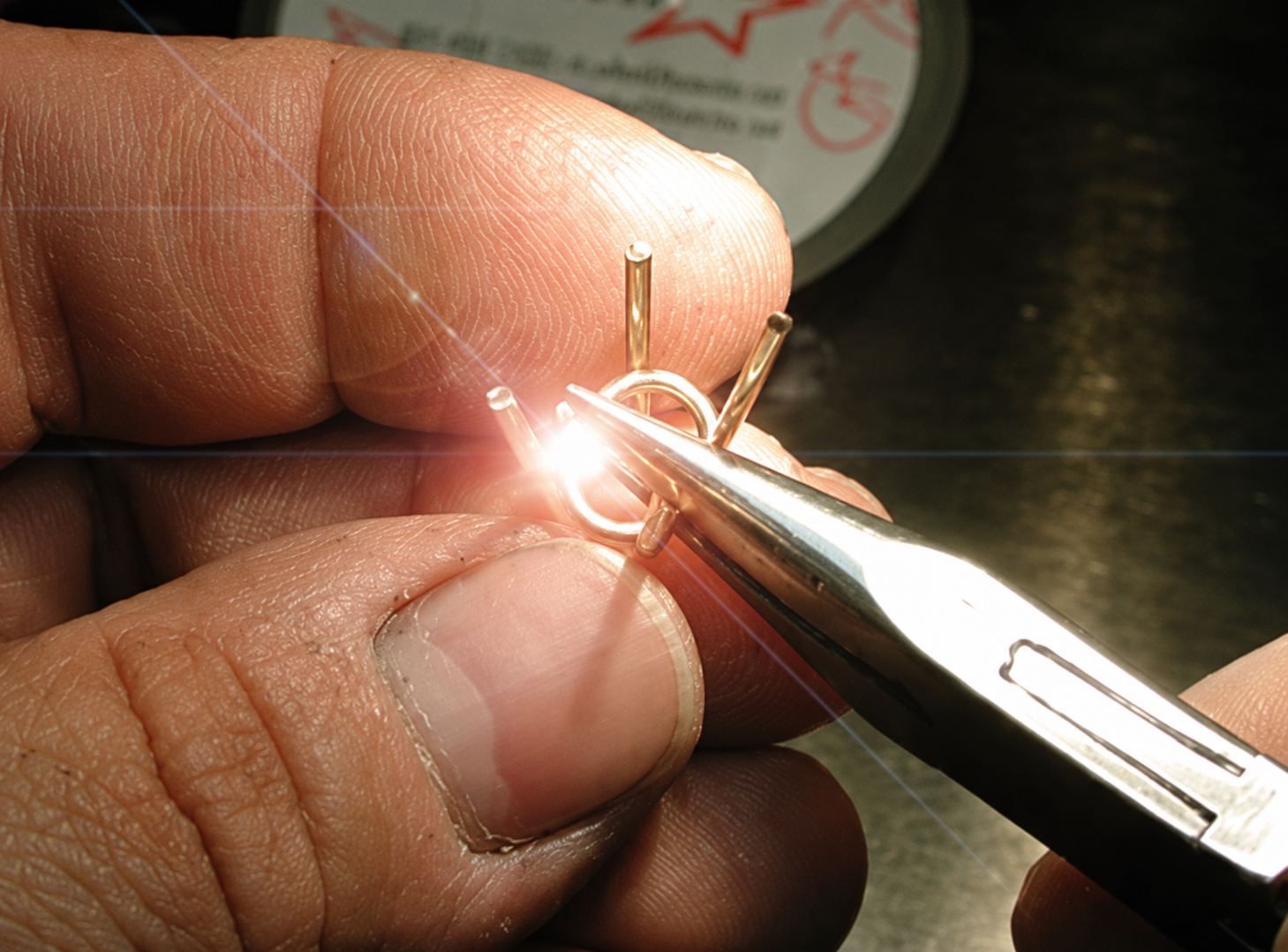
Yes. A jewelry laser welder is one of the most useful tools for professional jewelry repair, particularly when the work involves small components, valuable stones, delicate settings, platinum, or repairs that require highly localized heat.
Compared with traditional torch soldering, laser welding concentrates energy into a very small area. This allows a jeweler to rebuild prongs, resize rings, repair chains, attach posts, fill porosity, and work close to certain gemstones with less heat spreading through the entire piece.
However, a laser welder does not replace every traditional technique.
Torch soldering may still be faster for simple assembly work, large joints, broad seams, and low-volume repairs where the cost of laser equipment cannot be justified.
The practical answer is:
A jewelry laser welder is best for precision repairs, stone-adjacent work, difficult metals, and high-value pieces—but it should complement rather than completely replace the jeweler’s torch.
Jewelry Laser Welding at a Glance
Repair Question | Practical Answer |
|---|---|
Is it suitable for prong repair? | Yes—one of its strongest applications |
Can it resize rings? | Yes, including many stone-set rings |
Can it repair chains and earring posts? | Yes, with the correct spot size and fit-up |
Can it weld near gemstones? | Often, but the stone must still be evaluated |
Can it weld gold, silver and platinum? | Yes, although settings vary by alloy |
Can it join different metals? | Sometimes, but material compatibility must be tested |
Does it eliminate heat risk? | No—it reduces and localizes heat but does not remove risk |
Does it replace soldering completely? | No |
Is it suitable for beginners? | Yes, with structured training and practice |
Is it worth buying? | Usually for shops with regular laser-suitable repair volume |
Why Is Laser Welding Useful for Jewelry Repair?
Traditional soldering heats a relatively broad area of the jewelry.
That heat may travel into stones, soldered joints, thin settings, plating, enamel, or decorative details. The jeweler may need to remove stones, apply heat-protection materials, or disassemble part of the piece before completing the repair.
A laser welder for jewelry works differently.
It delivers controlled pulses to a small target under a microscope. By adjusting pulse energy, pulse width, spot size, and frequency, the operator can control how much metal is melted and how deeply the weld penetrates.
This offers several practical benefits:
Less heat spreads through the jewelry;
Small areas can be repaired accurately;
Nearby solder joints are less likely to reopen;
Distortion and post-weld finishing can be reduced;
Many repairs can be completed without removing every stone;
Matching filler wire can be added precisely;
Porosity and small defects can be filled locally.
The main benefit is not simply faster welding.
The real value is being able to complete repairs that would otherwise be risky, time-consuming, or impossible with a torch.
1. Prong Retipping and Rebuilding
Prong repair is one of the clearest reasons to use a jewelry laser welder.
Worn, broken, or weakened prongs are often located very close to the stone. Heating the complete setting with a torch may expose the gemstone and surrounding solder joints to unnecessary risk.
With a laser welder, the jeweler can place small amounts of matching filler wire directly onto the damaged area. The prong can then be rebuilt gradually under magnification.
This makes the laser suitable for:
Prong retipping;
Rebuilding missing prong sections;
Strengthening thin prongs;
Repairing shared-prong settings;
Filling porosity around a setting;
Correcting local casting defects.
Because the metal is added only where required, less filing and polishing may be needed afterward.
The process still requires careful control. Excessive pulse energy can melt a thin prong, damage the setting, or direct reflected laser energy toward the stone.
Laser welding reduces the risk around the setting, but operator skill remains essential.

2. Ring Resizing and Shank Repair
Laser welding is also highly effective for ring resizing.
After a ring is cut and adjusted, the two ends of the shank must be aligned accurately. A close fit helps create a clean joint and reduces the amount of filler wire required.
The laser can then tack the ring into position and build the joint through several controlled welds.
This method is particularly useful for:
Stone-set rings;
Platinum rings;
Multi-metal designs;
Rings with nearby solder joints;
Thin or detailed shanks;
Fractured ring bands;
Antique rings with delicate decoration.
Because the heat is concentrated around the joint, the jeweler may avoid removing certain stones or disturbing surrounding details.
The final result depends heavily on joint preparation. A wide or uneven gap can create porosity, incomplete fusion, or excessive filler buildup.
A laser welder improves precision, but it cannot compensate for poor fit-up or contaminated metal.
3. Chain, Jump Ring and Earring Post Repair
Fine chains, small jump rings, and earring posts can be difficult to repair with a torch because the components heat quickly and may melt before the joint is controlled.
A laser welder allows the operator to tack small parts into position and fuse them with localized pulses.
Common applications include:
Broken chain links;
Jump-ring closure;
Earring-post replacement;
Clasp repair;
Fine-wire assembly;
Bracelet-link repair;
Small hinge components;
Filigree restoration.
The parts should normally fit closely together before welding. Trying to bridge a large gap with laser pulses can create a weak, irregular joint.
Extremely fine hollow chains can remain challenging. Some designs are too thin, contaminated, or inaccessible to produce a reliable repair.
For these pieces, the jeweler must decide whether laser welding, soldering, link replacement, or another repair method offers the safest result.

4. Repairing Jewelry Near Gemstones
One of the strongest advantages of laser welding is the ability to work close to certain gemstones without heating the entire piece.
This can reduce the need to remove diamonds, sapphires, rubies, and other heat-resistant stones before completing a nearby repair.
Typical applications include:
Prong repair near a set stone;
Ring resizing without removing every stone;
Filling porosity close to a setting;
Repairing channels and bezels;
Reattaching small decorative elements;
Restoring antique stone-set jewelry.
However, “near a stone” does not mean “safe for every stone.”
Opals, emeralds, pearls, turquoise, coral, amber, enamel, fracture-filled stones, coated stones, and stones containing liquid inclusions may still be vulnerable to heat, shock, dehydration, or reflected laser energy.
The gemstone must be identified before welding. Its treatment status, stability, position, and distance from the weld should also be evaluated.
When uncertainty remains, removing the stone may still be the safest option.
A jewelwry welding machine reduces the heat-affected area, but it does not eliminate the need for professional gemological judgment.
5. Platinum Jewelry Repair
Platinum is one of the materials for which laser welding can provide especially strong advantages.
Its high melting temperature makes conventional repair more demanding. Broad heating can also affect surrounding stones and previously completed joints.
A laser welder can concentrate energy into the required area and build the joint with matching platinum wire.
It is commonly used for:
Platinum ring resizing;
Prong rebuilding;
Head replacement;
Porosity filling;
Cracked-shank repair;
Assembly of platinum components.
Correct pulse energy and penetration are important. A weld that looks smooth on the surface may still be shallow if the parameters are too weak.
For thick platinum sections, the jeweler may need to weld from several sides or build the joint in layers.
6. Gold and Silver Jewelry Repair
Gold alloys generally respond well to laser welding, although the correct settings depend on purity, alloy composition, color, and part thickness.
Yellow gold, white gold, and rose gold may require different filler wire and parameter adjustments to achieve an acceptable color match.
White-gold repairs may still require refinishing and rhodium plating after welding.
Silver can also be laser welded, but its high reflectivity and thermal conductivity can make the process less forgiving. It may require different pulse settings and more careful heat control than gold or platinum.
Contaminated, plated, or previously soldered areas should be cleaned before welding because oils, polishing compound, solder, and oxidation can create porosity.
The welding machine should be tested on the alloys the shop actually repairs rather than on generic metal samples alone.

7. Mixed-Metal and Difficult Repairs
Laser welding can make some mixed-metal repairs possible because the operator can direct energy toward a very small area and control which side of the joint receives more heat.
This may be useful for jewelry combining:
Gold and platinum;
Gold and stainless steel;
Precious-metal components and titanium;
Different colors or purities of gold;
New replacement parts and older cast jewelry.
However, not every metal combination forms a strong and stable weld.
Differences in melting temperature, thermal expansion, reflectivity, and metallurgy can lead to cracking, brittleness, porosity, or color mismatch.
Titanium and certain reactive metals also require effective argon shielding to reduce oxidation.
Mixed-metal work should therefore be tested carefully. The jeweler may need matched filler wire, an intermediate material, special preparation, or a different joining method.
Laser precision improves control, but it does not override basic material compatibility.
8. Antique and High-Sentimental-Value Jewelry
Antique jewelry often contains thin metal, old solder joints, unusual alloys, delicate filigree, enamel, and stones that are difficult to remove.
Applying broad heat may disturb several parts of the piece while solving only one problem.
Laser welding allows repairs to be completed in smaller stages. Individual wires, prongs, links, and decorative components can be stabilized without heating the complete object.
This can make the technology valuable for:
Heirloom rings;
Antique filigree;
Platinum Art Deco jewelry;
Delicate bracelets;
Vintage chain links;
Custom one-of-a-kind pieces;
Jewelry previously considered difficult to repair.
These jobs still require experience. Old metal may contain hidden cracks, previous solder, contamination, or unknown alloying elements.
High-value pieces should be inspected carefully, photographed, and tested conservatively before major welding begins.
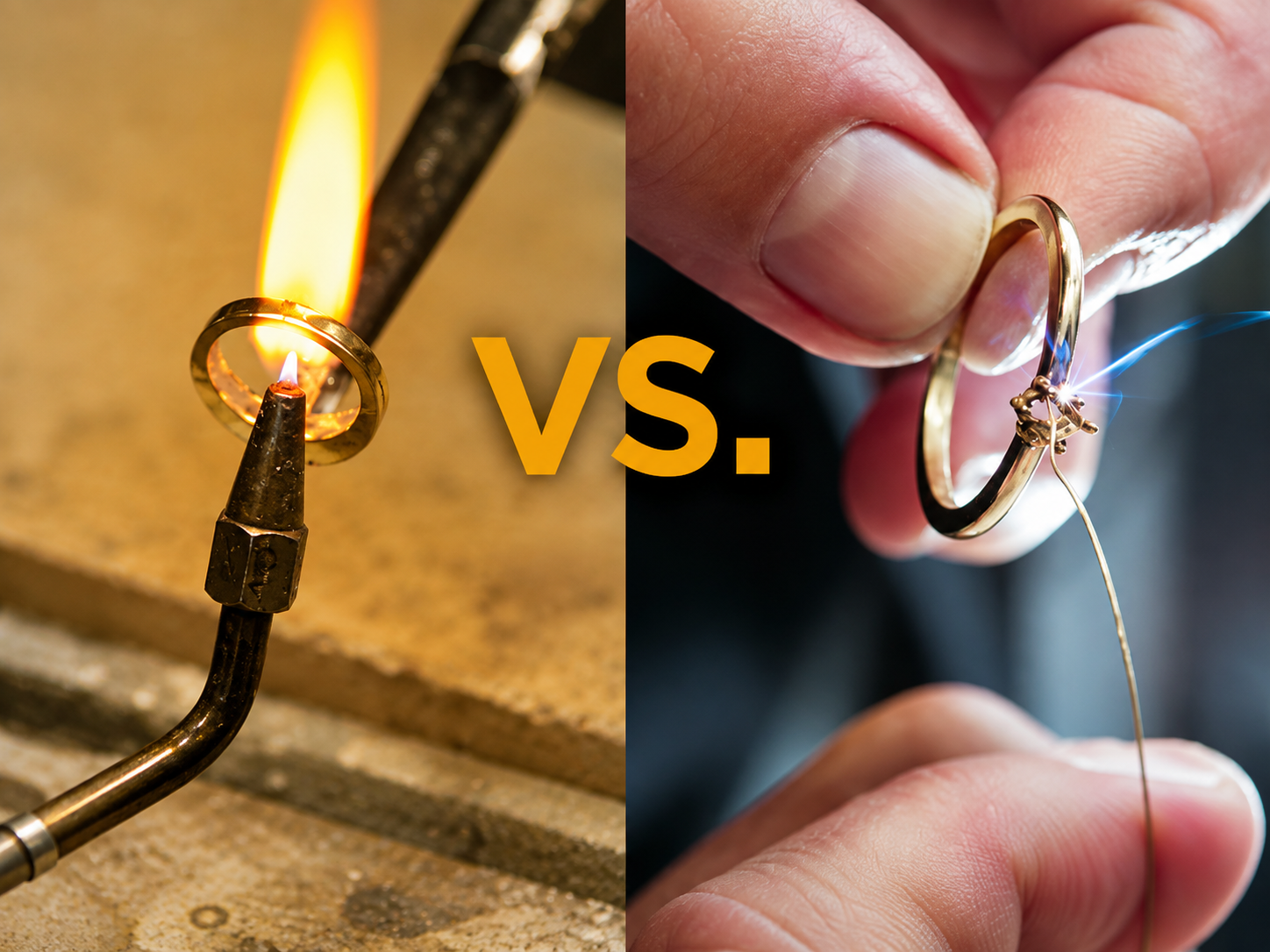
Laser Welding vs. Traditional Soldering
Laser welding and soldering should be viewed as complementary processes.
Comparison | Jewelry Laser Welding | Traditional Soldering |
|---|---|---|
Heat distribution | Highly localized | Broader heat distribution |
Precision | Excellent for small targets | Better for broader joints and assembly |
Stone removal | Sometimes avoidable | More often required near sensitive stones |
Filler material | Matching wire or self-fusion | Solder alloy |
Distortion risk | Generally lower | Higher on thin or complex pieces |
Joint preparation | Requires close fit and clean metal | Can tolerate some broader joint designs |
Large-area work | Slow and less practical | Often faster |
Learning curve | Requires microscope and parameter training | Requires strong flame-control skills |
Equipment investment | Higher | Lower |
Best role | Precision repair and difficult work | General assembly and broad heating tasks |
The laser does not make traditional bench skills unnecessary.
The jeweler still needs to understand metallurgy, joint design, filler selection, stone sensitivity, finishing, and repair sequencing.
What Are the Limitations of a Jewelry Laser Welder?
It Does Not Eliminate Gemstone Risk
Localized heat is safer than heating the complete piece, but a pulse can still damage a stone if it contacts the surface or transfers excessive heat through the setting.
Stone identification and treatment awareness remain essential.
It Requires Close Joint Fit-Up
Laser welding is not designed to bridge every large or irregular gap.
Poor alignment may lead to porosity, incomplete penetration, weak joints, or excessive filler use.
Large Repairs Can Be Slow
A desktop jewelry laser welder is optimized for small, precise work.
Long seams, thick castings, large decorative objects, and broad assembly joints may be faster with a torch, TIG system, or another welding process.
Some Alloys Are Difficult to Weld
Unknown alloys, contaminated castings, brittle metals, plated surfaces, and components containing previous solder may respond unpredictably.
Testing and proper surface preparation are important.
Results Depend on Operator Skill
The operator must learn how pulse energy, width, frequency, spot size, focus, filler wire, and shielding gas affect the weld.
A machine with higher wattage does not automatically produce a stronger or cleaner repair.
Equipment and Maintenance Add Cost
The purchase price may also be accompanied by costs for argon, filler wire, protective windows, filters, cooling maintenance, extraction, training, and replacement parts.
The printhead optics, microscope, shielding system, and work chamber also need regular cleaning and inspection.
Is a Jewelry Laser Welder Worth It for a Repair Shop?
A laser welder is more likely to justify its cost when the shop regularly handles:
Prong retipping and rebuilding;
Stone-adjacent repair;
Ring resizing;
Platinum jewelry;
High-value custom work;
Antique and sentimental pieces;
Chain and small-component repair;
Repairs currently outsourced to another workshop;
Jobs rejected because torch heating is too risky.
It may be harder to justify when the shop completes only a small number of repairs, mainly performs simple soldering, or lacks staff who can be trained to operate the machine regularly.
Do not base the decision only on the number of repair tickets.
Review how much the business currently spends on outsourced work, stone removal and resetting, rework, lost jobs, polishing, and repair turnaround time.
A useful calculation is:
Estimated payback period = Total startup investment ÷ Additional monthly profit and cost savings
The additional profit should include only work the machine can realistically bring in-house or complete more efficiently.
Avoid assuming that every repair will become faster or that every rejected job will suddenly become profitable.
What Should You Check Before Buying?
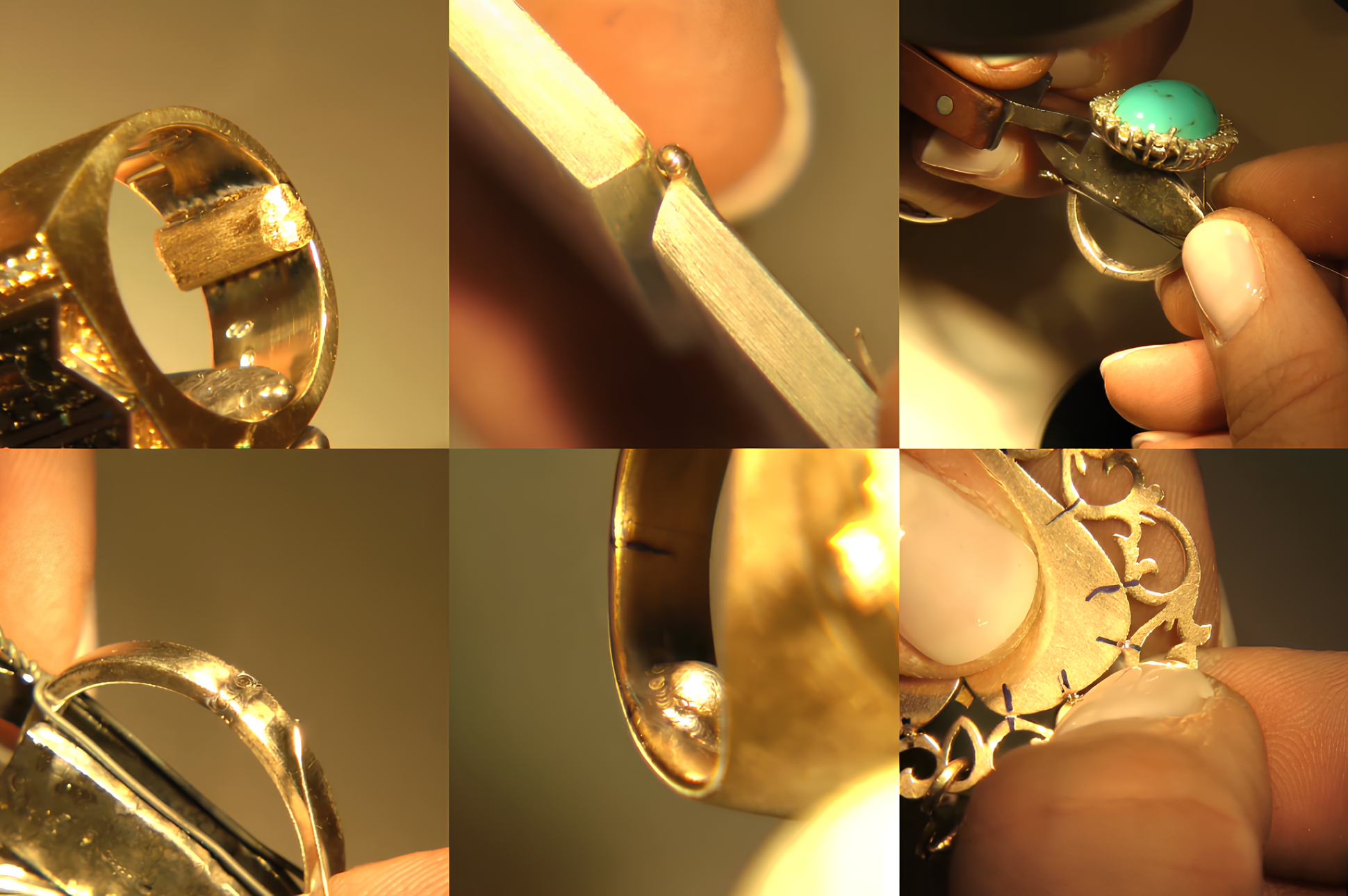
Before choosing a jewelry laser welder, provide the supplier with representative jewelry repair samples.
Include several of the jobs that matter most to the business, such as a thin chain, a damaged prong, a platinum ring, a silver component, a mixed-metal piece, and a repair located near a stone.
Evaluate:
Weld penetration;
Surface porosity;
Color match;
Joint strength;
Heat discoloration;
Distortion;
Amount of finishing required;
Ease of parameter adjustment;
Microscope clarity;
Argon-nozzle positioning;
Operator comfort;
Cooling stability during repeated work.
Also confirm the machine’s pulse energy, pulse-width range, spot-size range, frequency, cooling system, microscope, CCD display, spare-parts availability, warranty, and training.
The best demonstration is not a perfect weld on a supplier’s prepared sample. It is a successful repair on the type of jewelry your shop handles every day.
Conclusion
A jewelry laser welder is highly effective for jewelry repair when precision, limited heat input, and access to small areas are important.
It is particularly valuable for prong rebuilding, ring resizing, chain repair, earring-post attachment, platinum work, porosity filling, mixed-metal projects, and repairs close to certain gemstones.
Its limitations are equally important.
It cannot make every gemstone safe, repair every alloy, bridge poorly prepared joints, or replace the torch for all large and simple assembly work.
For an active repair shop, the strongest setup is usually not laser welding instead of soldering. It is laser welding alongside traditional bench techniques, with each process used where it performs best.
Considering bringing more jewelry repairs in-house?
Send JewelryLaserNova photos or samples of your typical repair work, together with the metals you handle, daily repair volume, and the most difficult jobs you currently outsource or reject. The team can arrange sample welding, recommend an appropriate machine configuration, and provide an itemized quotation covering training, warranty, consumables, and spare parts.