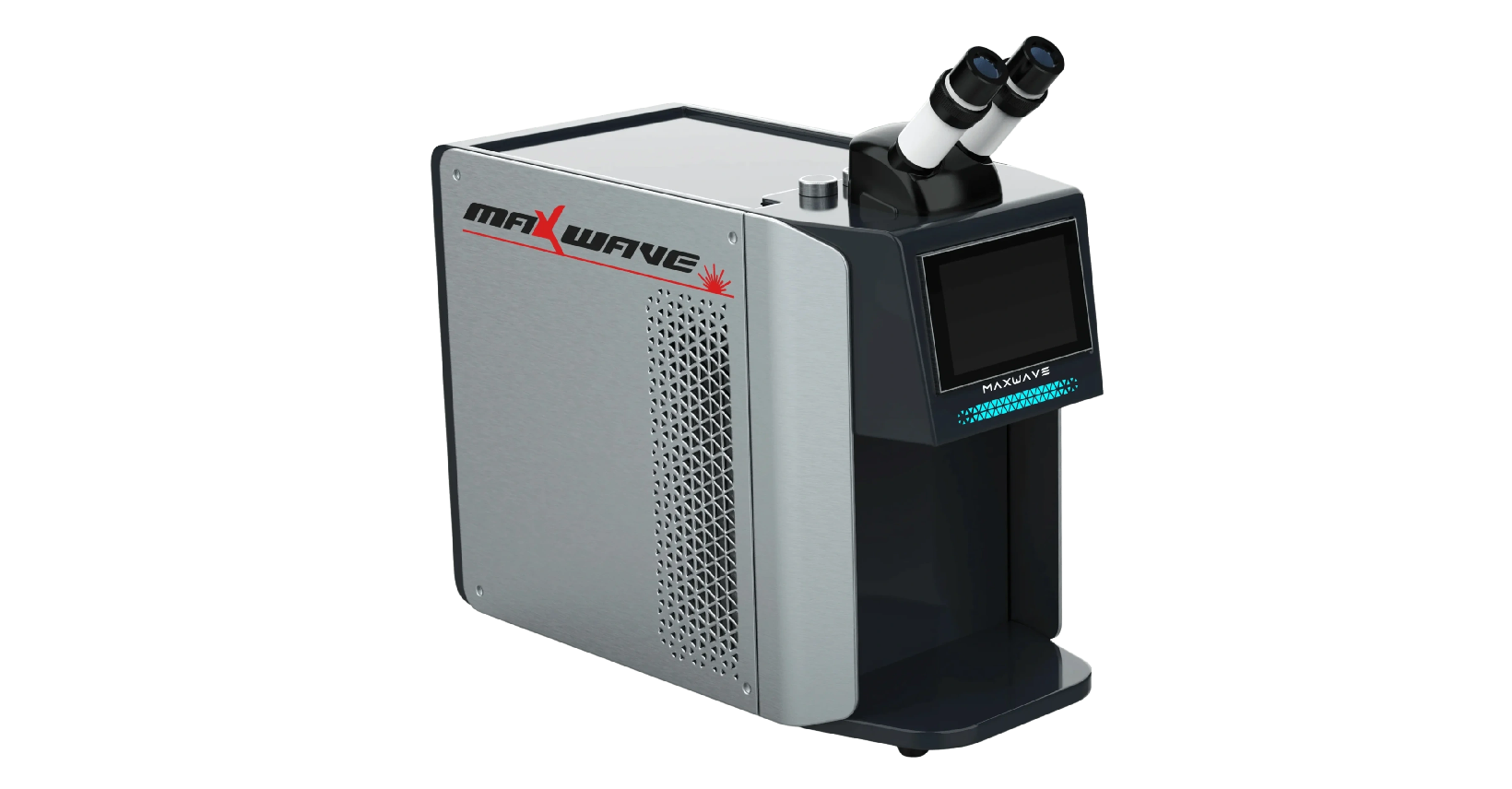
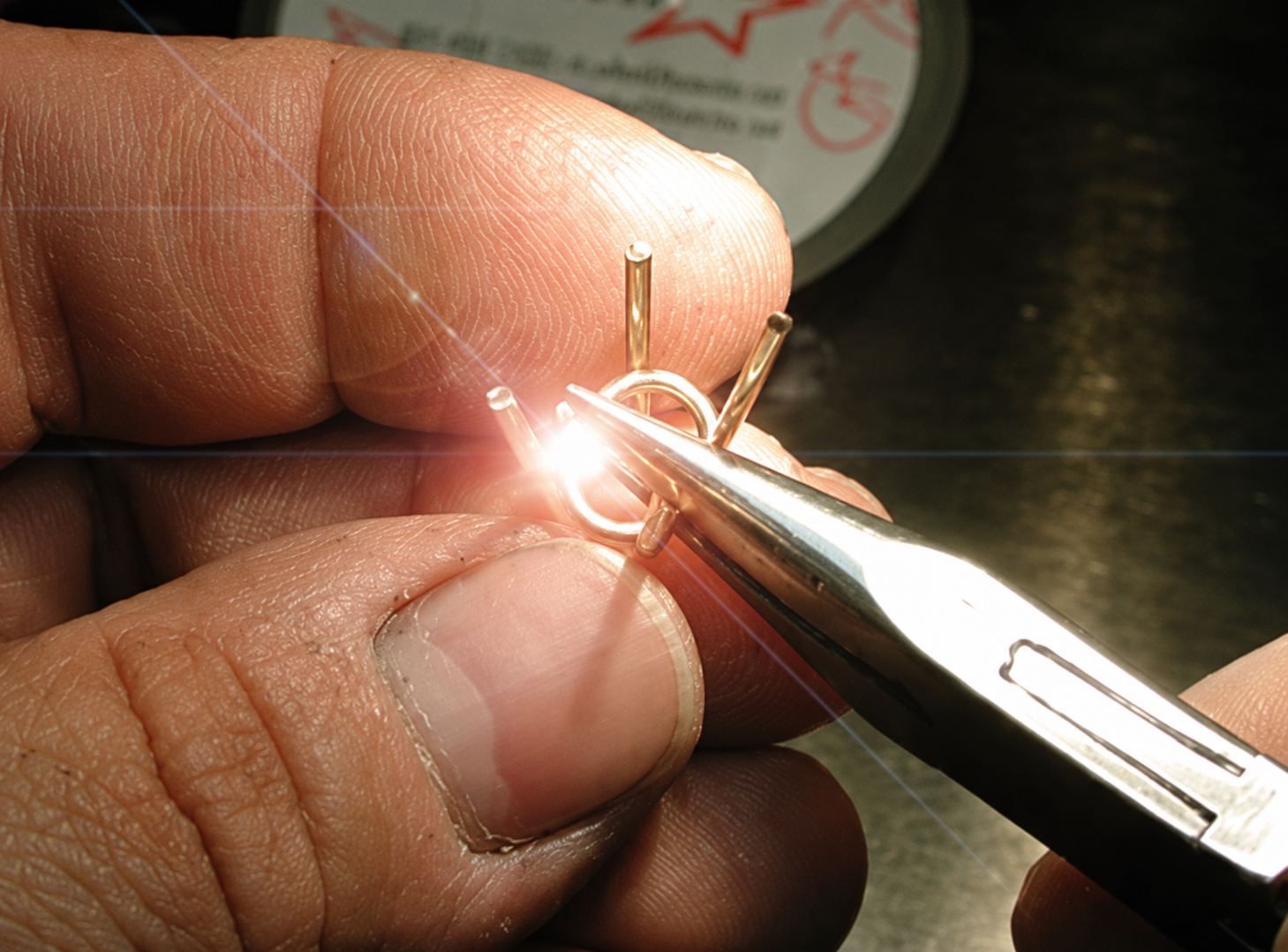
Buying a jewelry laser welder is not just a question of comparing wattage and price.
Two machines can look almost identical on a quotation but perform very differently once you start repairing sterling silver chains, rebuilding platinum prongs or welding close to valuable stones.
Before buying a jewelry laser welder, you need answers to three bigger questions:
Can the machine handle the jewelry you actually repair?
Will it work efficiently in your daily workshop?
Will the supplier still support you after the machine arrives?
The following 15 questions cover the points that matter most before you pay a deposit.
Can the Jewelry Laser Welder Handle the Work You Actually Do?
The first five questions should focus on applications, metals and welding capability. If the machine cannot reliably handle your normal jobs, everything else is secondary.
1. Which metals and alloys can this machine weld consistently?
Do not settle for “gold, silver and all metals.”
Ask specifically about the materials that arrive at your bench:
14K and 18K yellow gold.
White gold.
Rose gold.
925 sterling silver.
Platinum.
Palladium.
Titanium, if relevant to your work.
Different alloys behave differently under laser energy. Silver, for example, is generally more demanding because of its reflectivity and thermal conductivity, while heavier platinum repairs may require more energy reserve than small gold repairs.
The original draft correctly emphasizes asking suppliers about your actual metal mix rather than accepting a generic “welds everything” claim.
If silver, platinum or palladium represents a meaningful part of your business, ask to see those materials welded before purchasing.
2. Is the machine designed mainly for repair work, production, or both?
A repair shop and a jewelry manufacturer do not necessarily need the same machine.
A repair shop may prioritize fast parameter changes, precise positioning, small spot sizes and easy operation across many different pieces.
A production workshop may care more about repeated welding, cooling stability and consistent performance over longer working periods.
When comparing a laser welder for jewelry, tell the supplier what your normal day looks like instead of simply asking for their “best model.”
For example:
20–30 mixed repairs per day.
Continuous chain production.
Ring resizing and prong work.
Small custom jewelry batches.
Higher-volume manufacturing.
A good supplier should match the machine to the workload rather than automatically recommend the highest-power option.
3. What workload can the machine realistically handle in a normal day?
Peak power tells you very little about how comfortable a machine will be after several hours of repeated work.
Ask about continuous operating capability and cooling.
More importantly, describe your actual workload:
How many repairs do you complete per day?
How long are typical welding sessions?
Do operators work intermittently or continuously?
Do you run one shift or multiple shifts?
If you only repair 10–20 pieces a day, your requirements are very different from a manufacturer welding hundreds of similar components.
Cooling design becomes increasingly important as workload rises.
Do not buy production capacity you will never use, but do not buy an entry-level machine that becomes a bottleneck six months later.
4. How precisely can I control spot size and welding energy?
Maximum power gets most of the attention in sales brochures, but minimum controllable output can be just as important for jewelry.
You may need to weld:
A tiny prong tip.
A fine chain link.
A thin ring wall.
A small porosity defect.
A much heavier ring shank.
One fixed welding condition cannot handle all of these equally well.
Ask about adjustable spot size, pulse width, pulse energy or equivalent output control, and repetition rate.
For precision repair, the important question is:
How finely can I control the weld—not simply how powerful is the machine?
A capable jewelry laser welding machine should give an experienced operator enough range to move from delicate repair work to heavier sections without losing control.
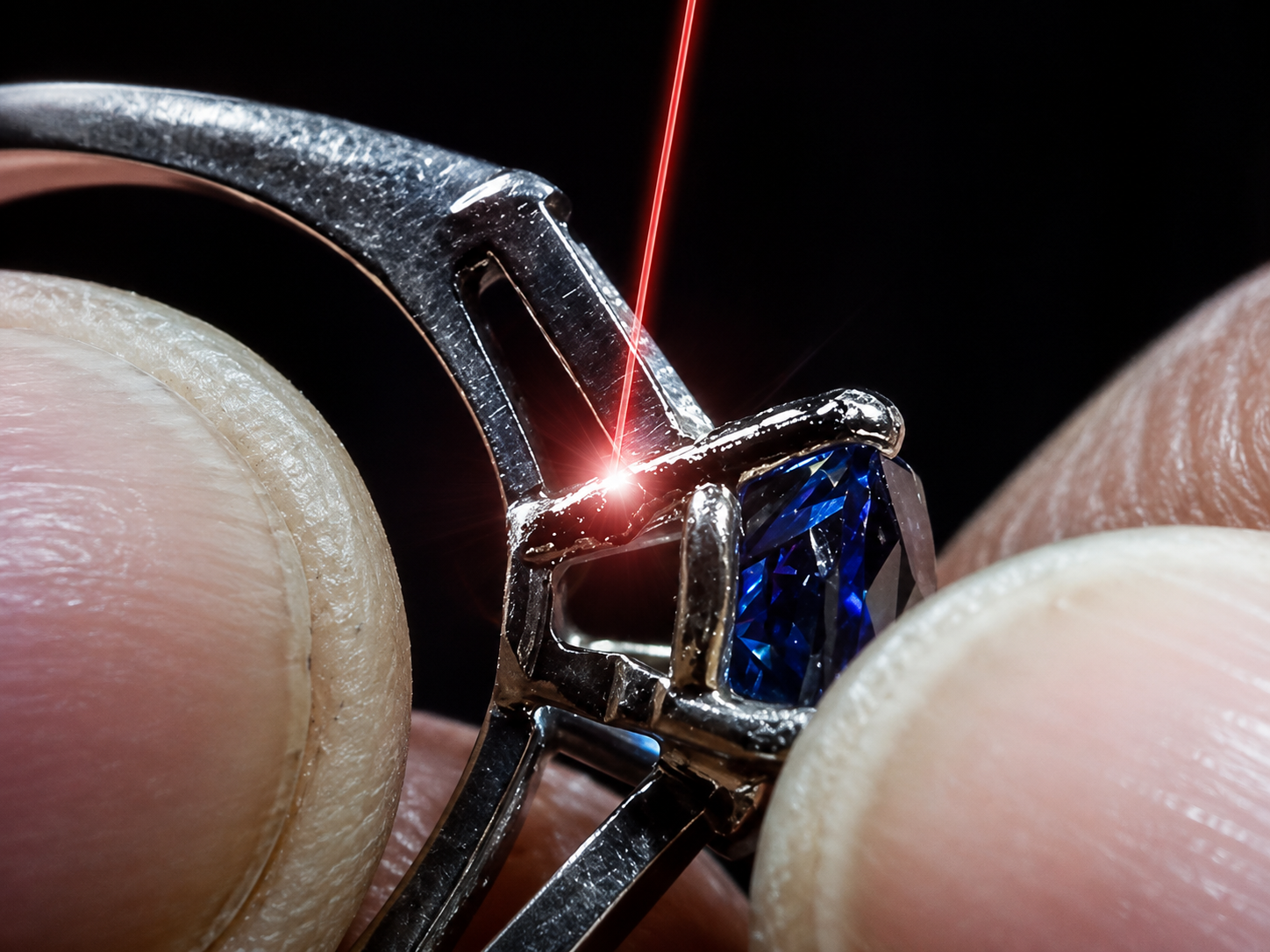
5. Can it weld safely close to stones and thin jewelry sections?
One of the biggest reasons jewelers move from broad heating methods to laser welding is localized heat control.
But “laser” does not automatically mean every stone-set piece can be welded without risk.
Ask the supplier to demonstrate work similar to yours:
Prong rebuilding near a stone.
Ring sizing close to a setting.
Chain repair.
Thin gold or platinum sections.
The key is not whether the laser can produce low power.
The key is whether the operator can create a stable weld pool at a sufficiently controlled heat input for delicate work.
You should also remember that some gemstones, treated stones and filled stones can still be heat-sensitive. Machine capability does not replace proper stone identification and bench technique.
Will the Machine Work Efficiently in Your Daily Workshop?
Once you know the machine can perform the repairs, the next question is whether your team will actually enjoy using it every day.
A machine can produce excellent sample welds and still be frustrating in a real repair workflow.
6. What laser technology and welding controls does the machine use?
Ask what is actually inside the machine.
Jewelry systems may use different laser architectures and power configurations, and the labels used by suppliers are not always directly comparable.
Instead of focusing only on one wattage number, ask:
What laser source is used?
What parameters can the operator adjust?
What is the available spot-size range?
What is the pulse-width range?
What output or energy range is available?
How is cooling handled?
You do not need to become a laser engineer.
You need enough information to compare two machines on the same basis.
Be cautious when a supplier talks almost entirely about maximum power but cannot explain how that power is controlled during fine jewelry repair.
7. Can I save and switch between welding presets easily?
A real jewelry bench constantly changes jobs.
You may move from yellow gold to sterling silver, then to platinum, then back to a fine chain repair.
Manually rebuilding every parameter set wastes time and increases the chance of operator mistakes.
Ask whether the system can store commonly used recipes or presets.
Useful presets might include:
14K yellow gold repair.
18K white gold repair.
Sterling silver.
Platinum prong work.
Fine chain.
Medium ring shank.
Presets should not replace operator judgment, but they make repeat work much faster.
This is especially important when several employees use the same jewelry welder.
8. What microscope, camera and lighting system are included?
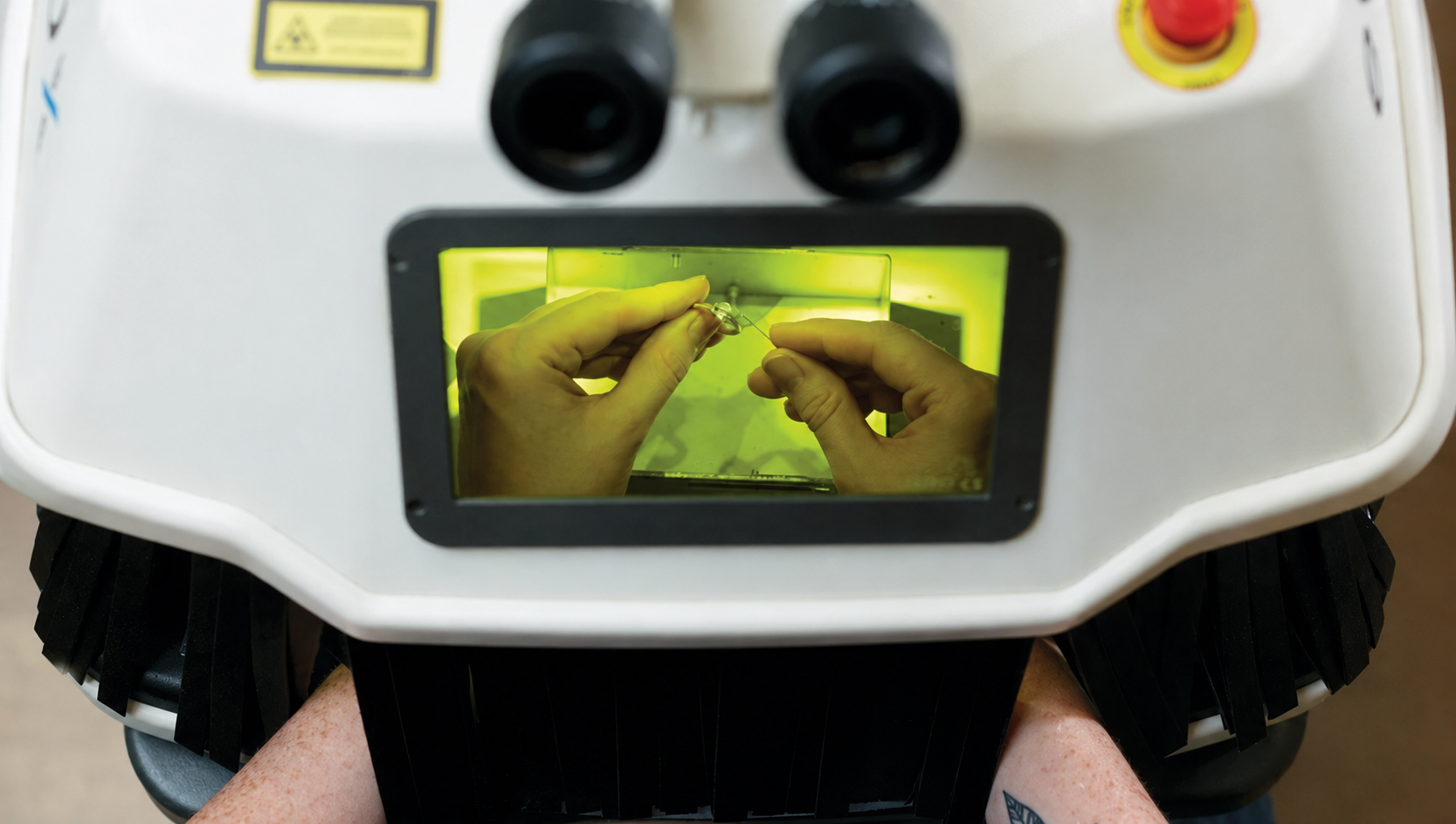
Precision welding is only possible when the operator can clearly see the joint.
Ask whether the machine uses a microscope, camera display or both.
More important than chasing the highest megapixel number is checking:
Is the image sharp enough for small prongs?
Can the operator comfortably see the weld pool?
Is lighting adjustable?
Is the viewing position comfortable?
Is there enough working space for rings, bracelets and other normal pieces?
If possible, use the machine yourself before buying or request a detailed operating video showing small repair work.
The viewing system should help the operator position the weld accurately rather than simply look impressive in product photos.
9. What electrical, cooling and space requirements should I prepare for?
This question can prevent a very unpleasant installation day.
Before ordering, confirm:
Machine dimensions.
Machine weight.
Packing dimensions.
Required voltage and frequency.
Maximum electrical load.
Air-cooled or water-cooled operation.
Chiller requirements, if applicable.
Required ventilation space.
Do not assume the machine is compatible with your local electrical supply simply because the supplier sells internationally.
Also consider the actual workstation.
Can the machine fit through the door?
Is there enough space for the operator?
Where will the argon cylinder go?
Can the machine be serviced without moving half the workshop?
These practical details matter far more than exotic specification numbers.
10. What safety and fume-control equipment do I need?
A laser welder is professional industrial equipment.
Ask what safety enclosure, viewing protection, emergency stop and interlock systems are included.
Also ask how welding fumes should be captured.
The exact extraction setup will depend on the machine and workload, but a supplier should be able to explain what they recommend rather than simply saying that jewelry welding produces “very little smoke.”
If your shop works with many alloys, plated materials or high-volume repairs, proper extraction becomes even more important.
Ask what is included with the machine and what must be purchased separately.
That gives you a more accurate installation budget.
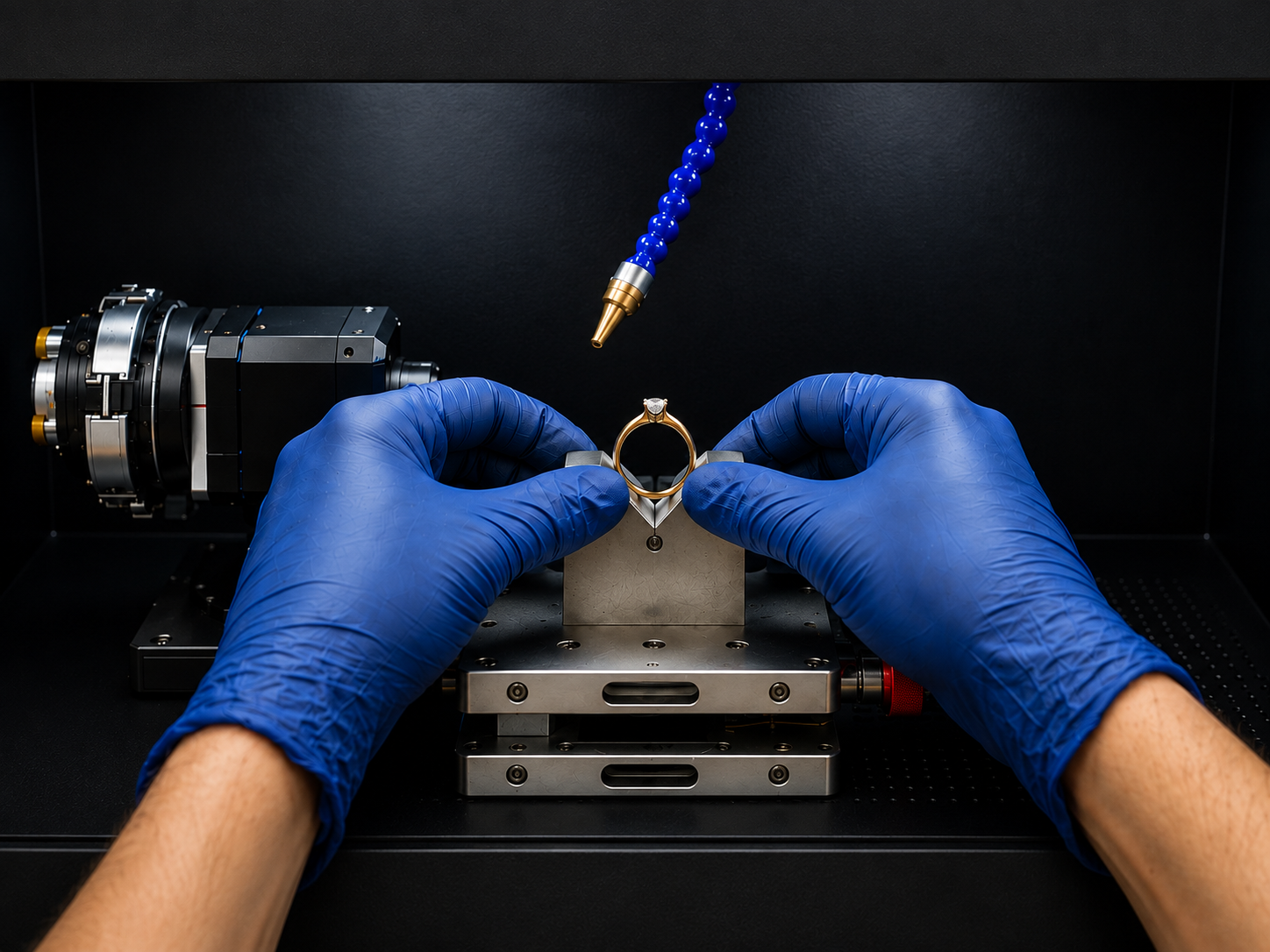
What Are You Really Getting From the Supplier?
The final five questions are often more important than another 20 or 30 watts of machine power.
A jewelry welding machine is not just hardware. You are also buying training, technical support, replacement parts and the supplier's ability to solve problems after installation.
11. Will you weld my actual jewelry samples before I buy?
This is one of the most important questions on the entire list.
Do not make your decision only from supplier demonstration videos.
Send representative samples.
Ideally, include the jobs that are most difficult for your workshop:
Sterling silver.
Platinum.
Fine chains.
Thin prongs.
Heavy ring shanks.
The supplier should show you the result and explain which machine configuration was used.
The original material states that JewelryLaserNova can provide sample welding using the buyer's actual materials before purchase, along with model recommendations based on application and repair volume.
This is a much stronger buying method than comparing specification sheets alone.
12. What training and setup support are included?
A good machine can still produce poor welds when operators do not understand how to adjust it.
Ask exactly what happens after delivery.
Does the supplier help with installation?
Is operator training included?
Is there live remote support?
Are parameter recommendations provided for common metals?
Are training videos available?
Can a new employee receive training later?
For first-time buyers, the quality of training can matter almost as much as the hardware.
The goal should not simply be:
“The machine turns on.”
It should be:
“My operator can confidently complete normal repair work.”
13. What exactly does the warranty cover?
Never stop at:
“Two-year warranty.”
Ask what that actually means.
Does it cover:
Laser source?
Power supply?
Control system?
Display?
Optical components?
Cooling components?
Labor?
Shipping?
Ask what happens when a component fails.
Do they ship the replacement part?
Do they diagnose remotely first?
Does the entire machine need to be returned?
Are consumable optics excluded?
A clear written warranty is far more useful than a longer warranty with vague exclusions.
14. Can I easily get spare parts and technical support after the warranty?
Eventually, something will need replacement.
That is normal industrial-equipment ownership.
Before purchasing, ask about availability and pricing for common parts such as:
Protective optics.
Filters.
Lamps or source-related components where applicable.
Cooling-system parts.
Microscope or viewing components.
Control electronics.
Foot pedals and switches.
Also ask whether the supplier can support the machine several years from now.
A slightly cheaper jewelry laser welder becomes expensive very quickly if a simple failed component leaves it idle for several weeks.
Supplier stability and spare-parts availability therefore belong in the buying decision.
15. What is the total cost—not just the machine price?
Finally, ask for an itemized quotation.
The real purchase cost may include:
Machine.
Required configuration or accessories.
Cooling system.
Argon setup.
Fume extraction.
Training.
Spare parts.
Shipping.
Insurance.
Import duties or taxes.
Installation.
Payment charges.
Ask what is included and what is not.
Then look beyond the first invoice.
Your longer-term ownership cost should consider routine consumables, preventive maintenance, replacement components and potential downtime.
This is where searching only for the lowest jewelry laser welder price can lead to the wrong decision.
A machine that costs slightly more but has better training, easier spare-parts access and stronger technical support may have a lower real ownership cost.
Quick Buyer Checklist
Before paying a deposit, you should be able to answer all 15 questions:
Which metals and alloys can it weld consistently?
Is it designed for repair, production or both?
What workload can it handle?
How precisely can spot size and energy be controlled?
Can it handle delicate and stone-adjacent work?
What laser technology and controls does it use?
Can welding presets be saved?
What viewing and lighting system is included?
What space, power and cooling does it require?
What safety and fume-control equipment is needed?
Will the supplier test your actual samples?
What training and setup support are included?
What exactly does the warranty cover?
Are spare parts and long-term support available?
What is the total purchase and ownership cost?
If a supplier cannot give clear answers to several of these questions, the problem is not necessarily that the machine is bad.
The problem is that you do not yet have enough information to make a confident purchase.
Conclusion
The best jewelry laser welder is not simply the machine with the highest power, smallest advertised spot or lowest price.
It is the machine that fits your metals, your repairs, your workload, your operators and your long-term service requirements.
Before buying, prioritize five things above everything else:
Real sample welding.
Precise parameter control.
Stable performance for your workload.
Training and technical support.
Clear warranty and spare-parts availability.
Do not let a supplier choose the machine based only on your budget.
Send them your actual applications first.
A serious supplier should ask what metals you weld, what repairs you perform, how many pieces you process and what level of precision you need before recommending a configuration.
If you are currently comparing machines, send JewelryLaserNova photos or samples of your typical gold, silver or platinum repairs, together with your expected workload. The team can perform sample welding and recommend a configuration based on the work you actually need to complete.