Choosing a jewelry laser welder is not simply a matter of buying the highest wattage your budget allows.
A solo goldsmith repairing fine chains has very different requirements from a busy jewelry store bringing ring sizing and prong repairs in-house. A custom jewelry studio working with platinum and complex settings needs something different again.
The right jewelry laser welder should match three things above all:
The repairs you perform most often, the metals you work with, and the amount of welding you expect to do each day.
After that, compare pulse control, spot size, microscope quality, cooling, argon shielding, training, spare parts, and support.
This guide shows how to make that decision without paying for specifications your workshop will never use.
Jewelry Laser Welder Selection at a Glance
Workshop Profile | Practical Starting Point | What Matters Most |
|---|---|---|
Solo jeweler / light repair bench | 60–100W class | Fine control, compact size, ease of use |
Active jewelry repair shop | 100–150W class | Versatility, microscope, cooling, pulse control |
Professional / high-volume workshop | 150–200W class | Power reserve, cooling stability, repeatability |
Custom jewelry studio | 100–200W depending on work | Spot-size range, open workspace, material flexibility |
Jewelry manufacturer | Higher-duty professional system | Cycle consistency, cooling, service and production stability |
These ranges are starting points rather than fixed rules. Two machines with the same wattage can perform very differently if their pulse energy, spot control, optics, or cooling systems are different.
1. Start With the Repairs Already Coming Across Your Bench
Before comparing machines, look at your recent repair tickets.
What percentage of your work is chain repair, prong rebuilding, ring sizing, porosity filling, stone-adjacent work, platinum repair, or custom assembly?
That repair mix should drive the purchase.
A workshop mainly handling fine chains, earring posts, small prongs, and occasional ring work does not need the same machine as a shop regularly resizing heavy platinum bands or rebuilding substantial settings.
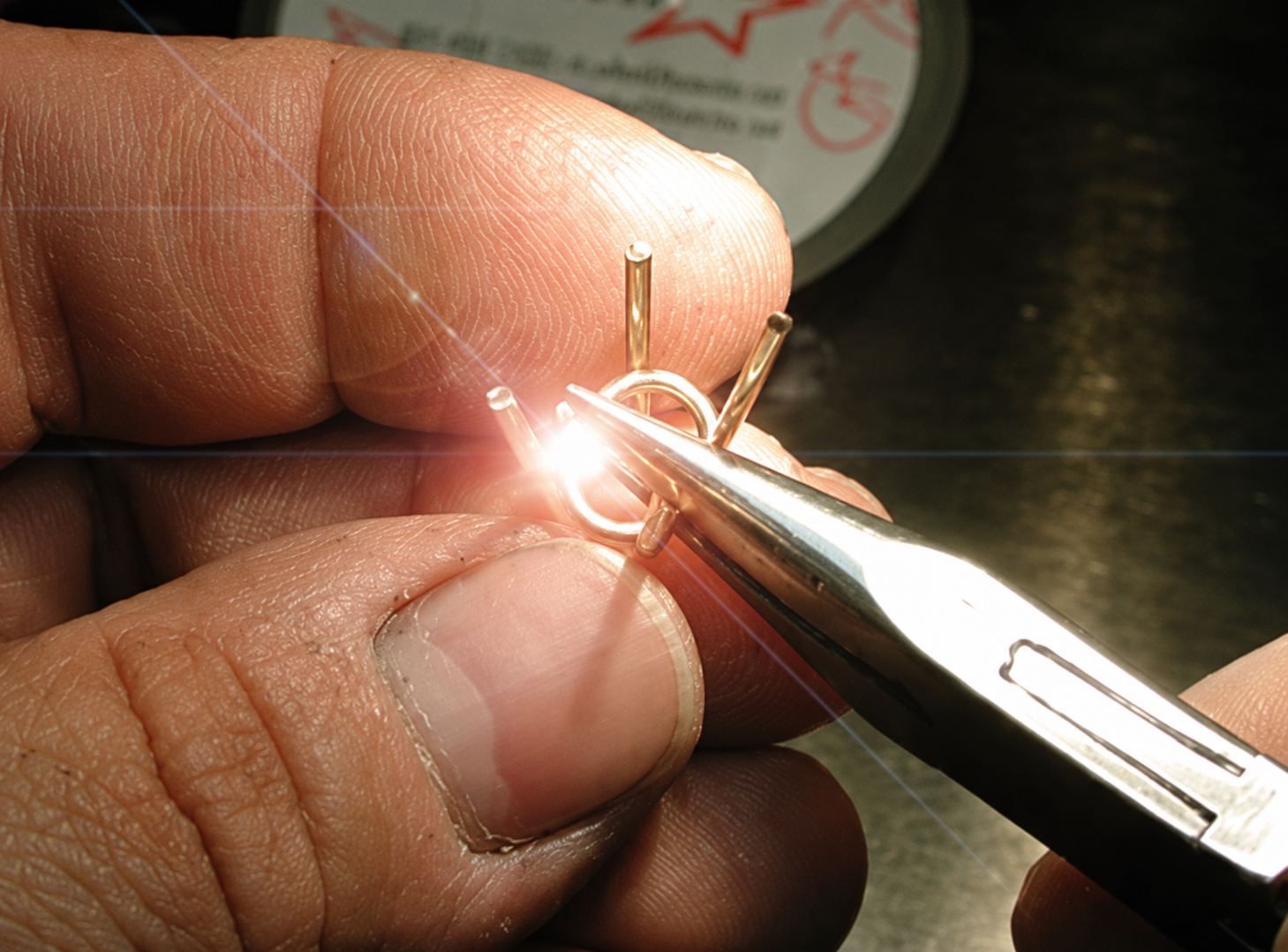
For precision laser welding for jewelry, control is often more important than maximum output.
Fine repairs benefit from a small adjustable spot, responsive pulse control, and a clear microscope. Heavier ring and platinum work requires more energy reserve and stronger cooling.
This leads to an important buying principle:
Choose for the work you perform every week, not the most extreme repair you might receive twice a year.
2. Choose the Right Power Range
Wattage matters, but it should be treated as available capacity rather than a measure of weld quality.
60–100W: Light and Precision-Oriented Repair
A lower-power professional system can be suitable for bench jewelers mainly performing chains, small findings, light prong work, porosity filling, and fine gold repairs.
The advantage is that you are not paying for power reserve that may never be used.
This category can work well for a solo jeweler adding laser capability alongside traditional soldering.
The trade-off appears when the workload expands into substantial platinum pieces, thicker ring shanks, or frequent daily repairs.
100–150W: The Practical All-Round Range
For many active jewelry repair shops, this is the most useful middle ground.
It provides enough flexibility for fine chain and prong work while offering more reserve for ring sizing, white gold, silver, platinum, and larger repairs.
This is particularly useful for jewelry stores bringing outsourced repairs in-house because the daily job mix can change dramatically.
One repair may involve a delicate gold chain; the next could be a platinum ring or a worn setting.
For a mixed professional repair bench, versatility usually matters more than maximum power.
150–200W: Heavy Repair and Higher Workload
A higher-capacity machine becomes more attractive when thick rings, substantial prong rebuilding, platinum, larger cast sections, or high daily repair volume are normal rather than exceptional.
The main benefit is not that every repair should use more power.
It is having additional power reserve when a demanding joint requires it.
A larger-capacity system can operate delicately when properly controlled, but a smaller machine cannot create additional reserve when it reaches its practical limit.
That makes 150–200W worth considering for busy professional workshops and production environments.

3. Do Not Compare Wattage Alone
This is one of the most important parts of choosing a laser welder for jewelers.
Two 150W machines can produce very different results.
The parameters that matter most are pulse energy, pulse width, frequency, and spot size.
Pulse energy determines how much energy can be delivered in an individual weld. This becomes especially important on thicker sections and demanding materials.
Pulse width controls how long the pulse acts on the metal. A broad adjustable range gives the operator more flexibility between delicate and heavier repairs.
Frequency affects how rapidly repeated pulses can be delivered. It becomes increasingly important for repetitive seams and higher-volume workflows.
Spot size determines how concentrated the energy is. A very small spot is useful for prongs, chains, filigree, and precision repairs, while a wider spot can help with ring shanks and larger joints.
The best machine is therefore not necessarily the one with the biggest wattage number.
A broad, stable adjustment range is often more valuable than one impressive maximum specification.
4. Match the Machine to the Metals You Actually Repair
A supplier may advertise that the machine welds gold, silver, platinum, titanium, stainless steel, and other metals.
That statement is useful only if the machine performs well on the alloys your workshop actually uses.
Gold is generally one of the core applications for jewelry laser welding, but yellow, white, and rose gold can still require different settings and filler materials.
Silver behaves differently because of its thermal and optical characteristics and should be tested separately rather than assuming gold parameters will transfer directly.
Platinum can benefit from greater pulse-energy reserve, particularly on substantial ring shanks and rebuilt settings.
Mixed-metal jewelry adds another level of difficulty because different alloys may respond differently to the same pulse.
Therefore, do not accept a generic “works with all metals” demonstration.
Ask the supplier to weld your gold, your silver, and your platinum pieces.
The result matters more than the compatibility list.
5. Pay Attention to the Microscope and Viewing System
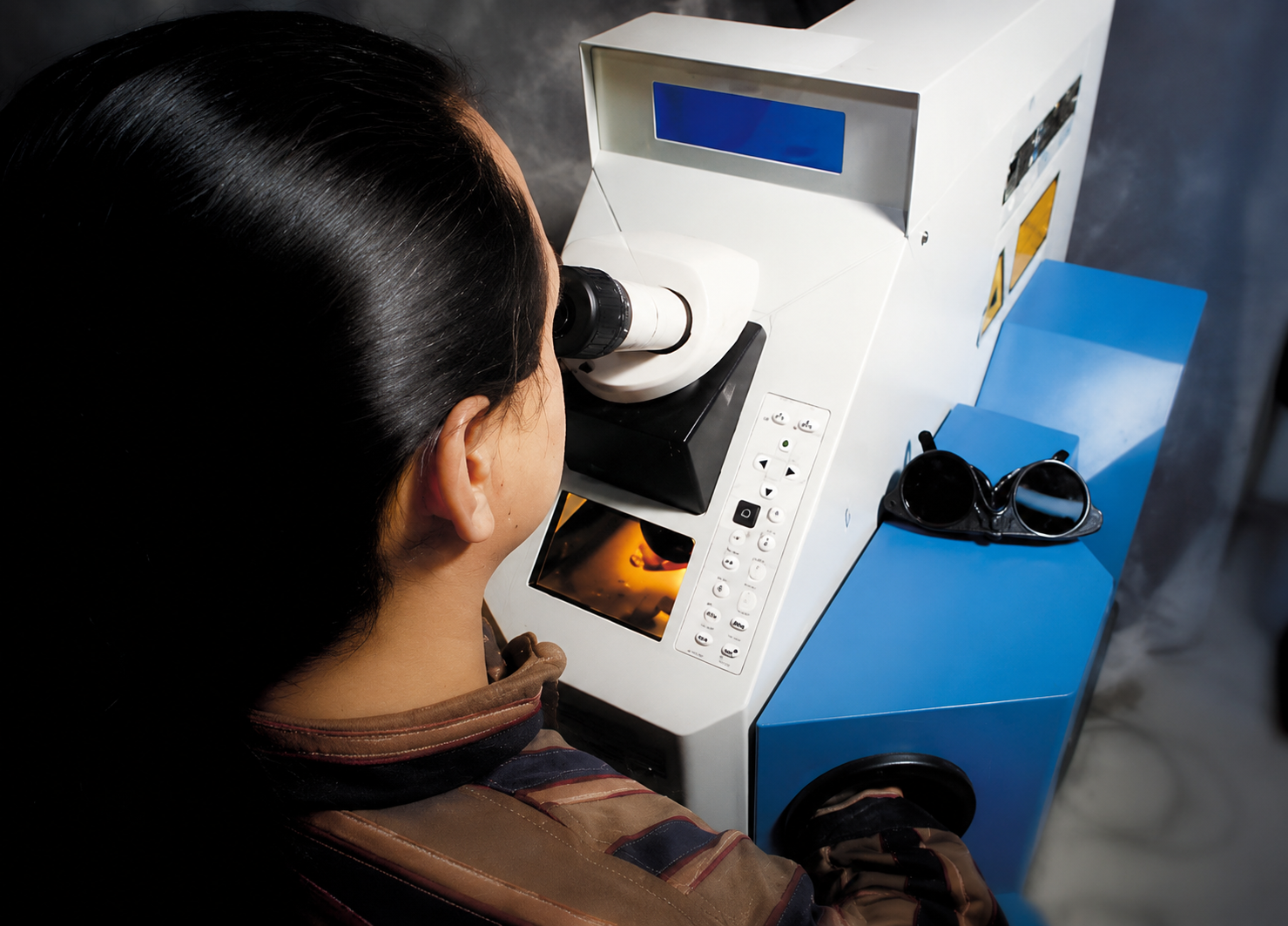
The microscope is not a minor accessory.
For a professional jewelry repair bench, it directly affects weld placement, operator comfort, and the ability to work accurately on very small features.
A clear binocular microscope is particularly valuable for prong work, chains, porosity, and repairs close to settings.
A CCD or screen can also be useful for training, documentation, demonstrations, and situations where another person needs to observe the repair.
Some jewelers prefer using both.
During a demonstration, do not only inspect the weld.
Spend time looking through the microscope.
Check whether you can position filler wire comfortably, maintain a clear view of the melt area, and work without adopting an awkward posture.
A powerful laser with uncomfortable optics becomes frustrating very quickly during a full day of repair work.
6. Evaluate Cooling Based on Your Workload
Cooling matters more as repair volume increases.
A machine performing a few short repairs each day faces a very different thermal workload from one used continuously in a busy production environment.
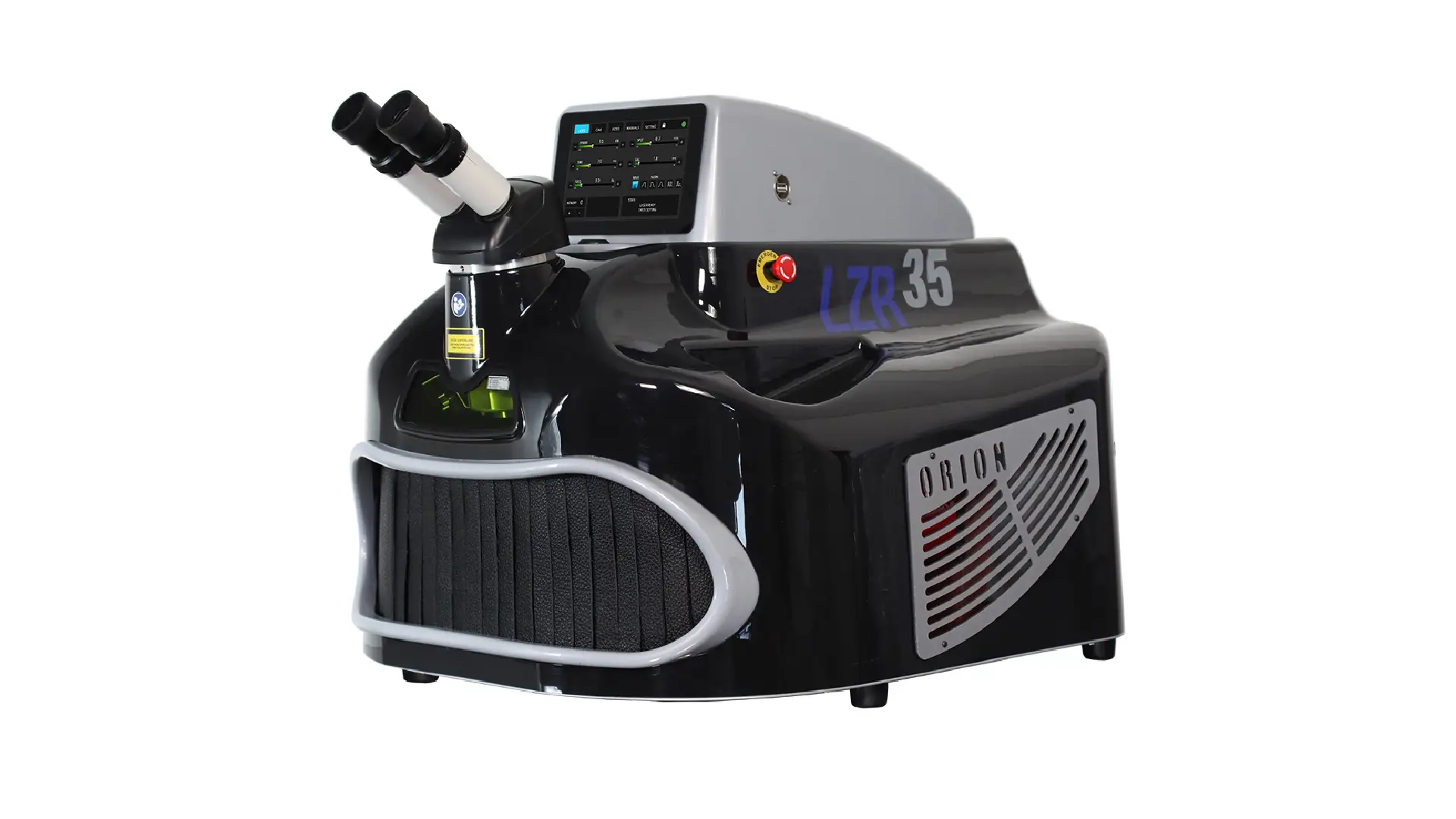
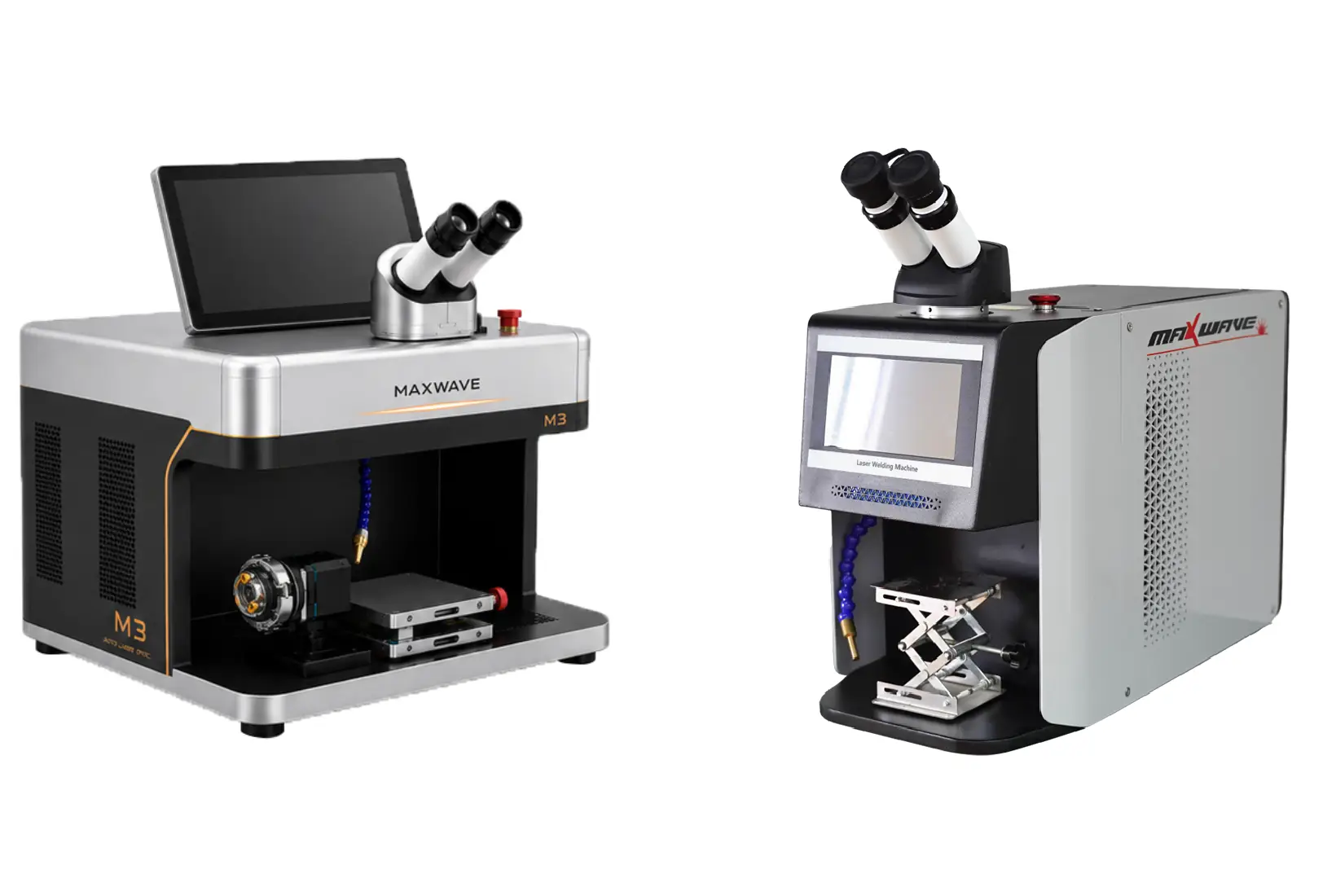
Compact air-cooled systems can be attractive because they reduce size, installation complexity, and maintenance.
Water-cooled systems provide greater thermal capacity and are commonly used when welding sessions are longer or more demanding.
Neither design is automatically better.
The correct question is:
Can the cooling system maintain stable output throughout my normal working day?
Ask the supplier to demonstrate repeated welding rather than only several isolated pulses.
A single perfect sample does not prove that the machine will remain stable during sustained shop use.
7. Check Argon Shielding and the Work Area
Argon shielding helps reduce oxidation around the weld and can improve joint cleanliness on materials where oxidation is a concern.
The nozzle should be easy to position close to the welding area without blocking the jeweler's view.
Also look at the physical work area.
A workshop repairing rings and chains may be comfortable with a compact chamber.
A custom jeweler working on bracelets, watches, unusual assemblies, or larger decorative pieces may benefit from a more open workspace.
Think about the objects you actually handle before deciding whether a compact machine is an advantage or a limitation.
8. Consider How the Machine Fits Your Bench
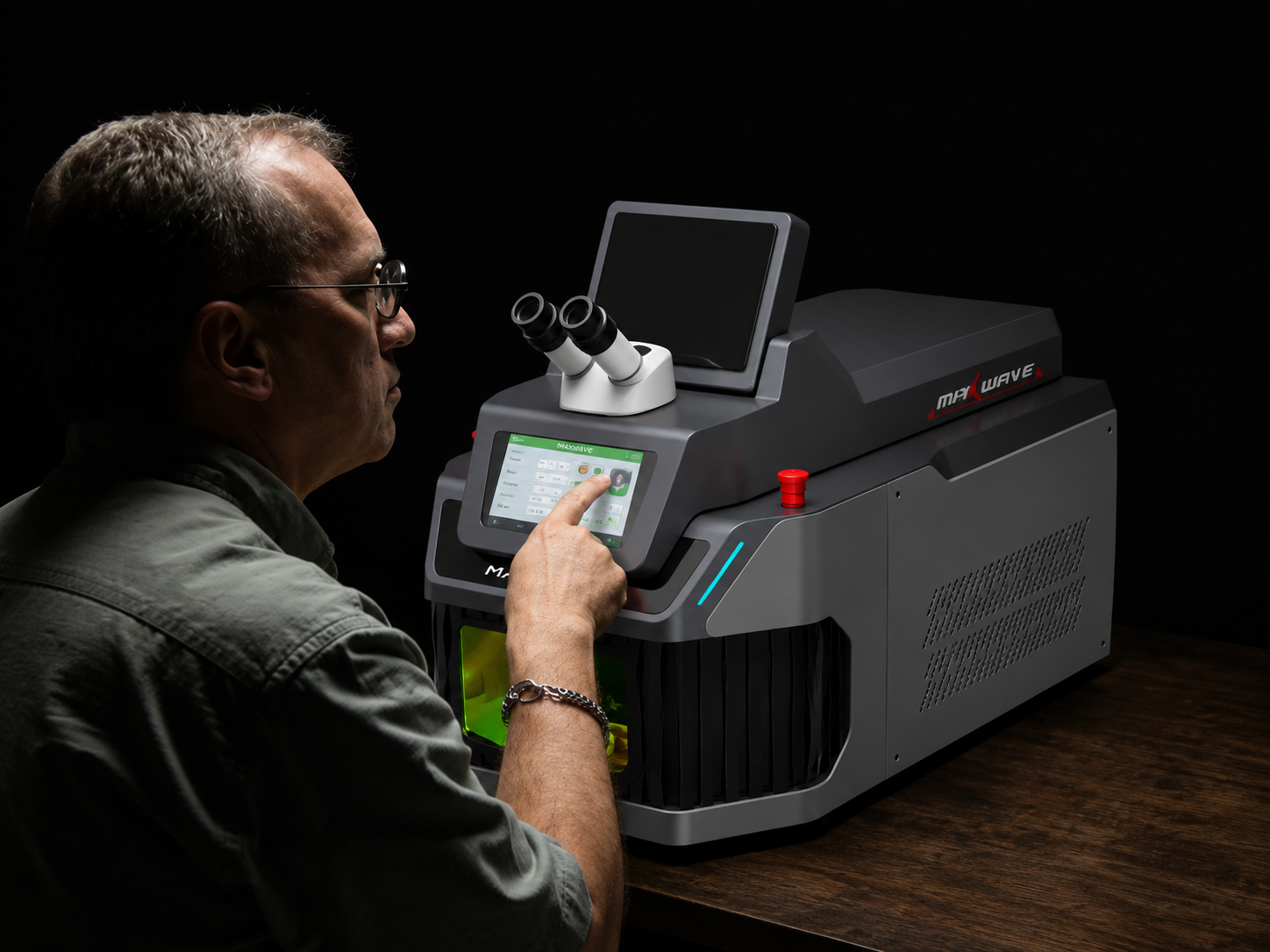
A jewelry laser welder should fit into the workflow rather than forcing the entire workshop to reorganize around it.
Check the machine dimensions, working height, weight, electrical requirements, cooling system, argon connection, and space required for the operator.
Compact desktop machines can be ideal for repair shops with limited bench space.
Larger pedestal or cabinet systems may provide stronger cooling and a larger workspace but require a permanent location.
Also consider noise and heat generation if the machine will operate close to retail customers or other jewelers.
Bench compatibility is a real specification, even though it rarely appears near wattage on the product page.
9. Think About Repair Volume—But Avoid Arbitrary Job Counts
You do not need a fixed rule such as “20 repairs per day means 150W.”
A prong retip and a heavy platinum resize do not place the same demand on a machine.
Instead, evaluate workload using two questions:
How often will the laser be used?
and
How demanding are those jobs?
A solo goldsmith performing a few precision repairs may value compact size and control.
A retail repair shop using the machine throughout the day needs stronger cooling, easy parameter recall, and fast switching between different jobs.
A production workshop needs repeatability and uptime more than portability.
This is a more useful way to classify your workshop than simply counting the number of welds.
10. Training, Spare Parts, and Support Matter More Than They Look
A jewelry laser welding machine is not valuable when it is sitting unused because the operator cannot resolve a calibration or maintenance issue.
Before purchasing, understand exactly what happens after delivery.
Training should cover machine setup, focusing, pulse adjustment, filler-wire technique, argon use, cleaning, routine maintenance, and common troubleshooting.
For many factory-direct machines, online training is the normal model. That can work well when the manufacturer provides structured live instruction, clear documentation, video demonstrations, and responsive remote support.
Also ask about replacement parts.
You should know the availability and approximate cost of protective windows, filters, lamps or laser-source components where relevant, microscope parts, cooling components, control boards, and other service items.
Do not evaluate warranty length alone.
A long warranty is not especially useful if a critical part takes months to arrive.
11. Request Real Sample Welding Before You Buy
This is the most reliable way to compare jewelry laser welders.
Do not ask the supplier to show another perfectly prepared metal plate.
Send jewelry representative of your real repair work.
A useful test set might include a fine chain, worn prong, normal gold ring, platinum shank, silver component, and one difficult repair your shop currently outsources or rejects.
Then compare:
How easily the operator can position the weld.
How cleanly the metal fuses.
Whether porosity appears.
How much discoloration is created.
How much finishing is required.
Whether the machine can repeat the result.
The supplier should also tell you which pulse energy, pulse width, spot size, and frequency were used.
That gives your operator a practical starting point after installation.
A successful weld on your actual jewelry is far more valuable than a long specification sheet.
12. Compare the Complete Ownership Package
Do not compare one supplier's machine price with another supplier's complete package.
Ask for an itemized quotation.
It should clearly state what is included in the machine price, such as the microscope, CCD system, cooling equipment, argon accessories, foot pedal, software, tools, training, spare parts, warranty, packaging, and shipping.
The cheapest quotation may become much less attractive after necessary accessories are added.
Likewise, a higher quotation may make sense when it includes training, sample testing, spare parts, and stronger support.
For a professional workshop, total ownership cost matters more than the invoice on purchase day.

Which Jewelry Laser Welder Should You Choose?
For a solo jeweler or light repair bench, prioritize fine pulse control, microscope quality, compact size, and ease of operation. A 60–100W class system may provide everything the workload requires.
For an active jewelry repair shop, a 100–150W class machine often offers a strong balance between precision and versatility.
For a professional workshop handling platinum, substantial repairs, or demanding daily workloads, a 150–200W system provides greater reserve and flexibility.
For a custom jewelry studio, pay particular attention to spot-size range, workspace access, microscope quality, and material flexibility.
For a production environment, prioritize cooling, consistency, repeatability, service support, and uptime rather than simply buying the highest wattage.
These are starting points.
Your actual repair samples should make the final decision.
Conclusion
Choosing a jewelry laser welder becomes much easier when you start with your workshop rather than the machine catalog.
First, identify the repairs and metals that make up most of your workload.
Then choose enough power for those jobs without automatically paying for unused capacity.
After that, compare the specifications that actually control repair quality: pulse energy, pulse width, frequency, spot size, microscope, cooling, argon shielding, and workspace design.
Finally, evaluate training, spare parts, warranty, and support—and insist on sample welding before purchasing.
The best jewelry laser welding system is not the one with the highest wattage or longest feature list.
It is the machine that produces clean, repeatable repairs on the jewelry already coming across your bench.
Not sure which configuration fits your workshop?
Send JewelryLaserNova photos or samples of your typical repairs, along with the metals you work with, daily workload, and the jobs you currently outsource or find most difficult. The team can perform sample welding, recommend an appropriate configuration, and provide an itemized quotation covering the machine, training, warranty, and spare parts.