Yes, some gold-filled jewelry can be laser welded, but keeping the original gold surface completely intact at the weld point is not guaranteed.
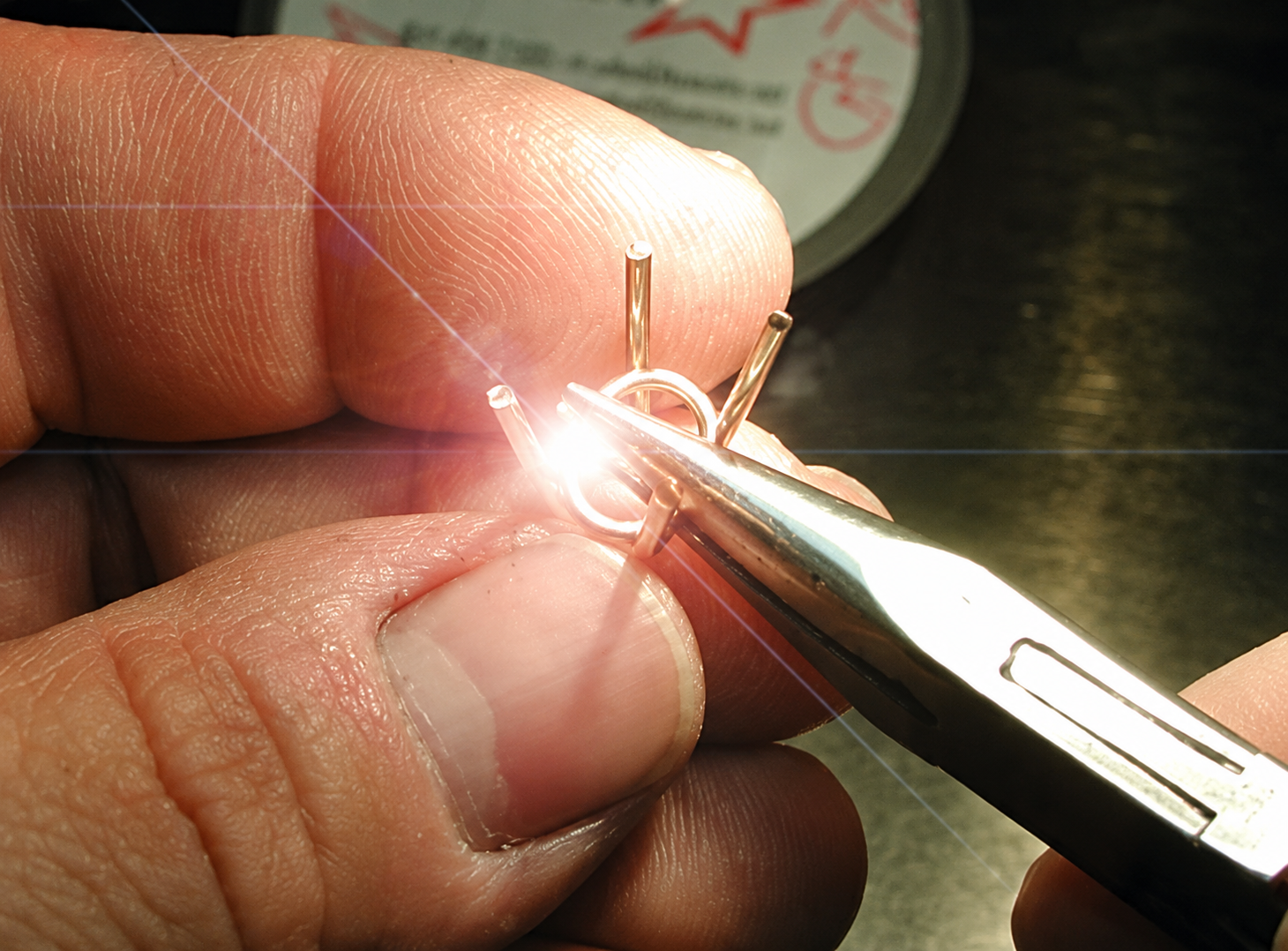
A jewelry laser welder can concentrate energy on a small joint, reducing unnecessary heating of nearby metal. This makes it possible to attempt certain gold-filled chain, jump-ring, and connector repairs that would be difficult with conventional torch soldering.
However, gold-filled jewelry is different from solid gold. Its outer gold-alloy layer is bonded to a base-metal core, often brass or another copper alloy.
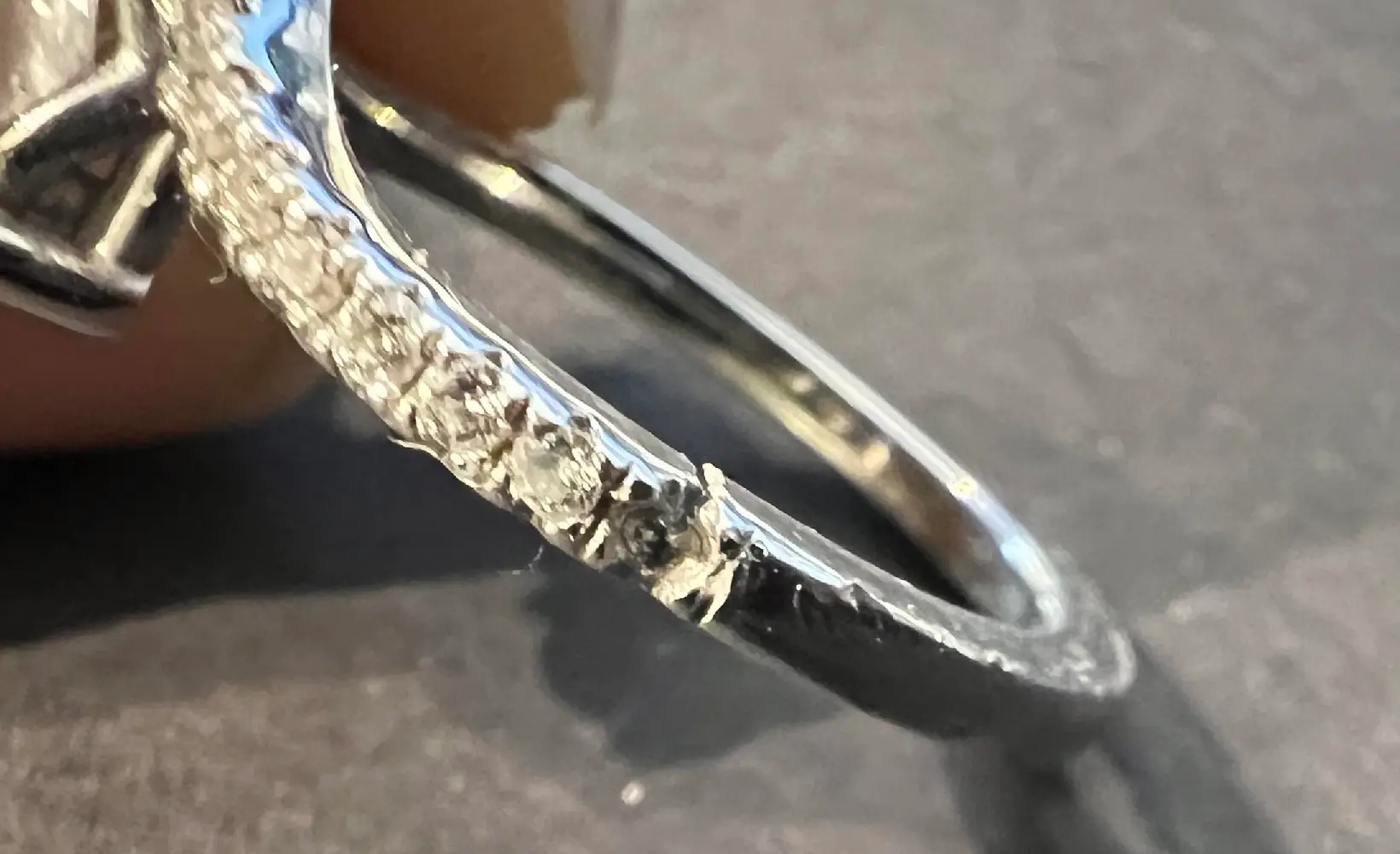
When the joint melts, the laser may expose or mix the core metal with the gold layer. This can leave a visible weld mark, discoloration, or a spot that darkens with wear.
For jewelry repair shops, the decision depends on the type of repair and the customer's expectations.
Gold-Filled Repair | Is Laser Welding Practical? | Main Risk |
|---|---|---|
Small jump ring | Possible with careful testing | Exposed core and a dark weld mark |
Broken chain link | Depends on link size and construction | Burn-through or weak fusion |
Clasp connection | Sometimes; replacement may be better | Damage to adjoining components |
Ring resizing | High-risk repair | Exposed core and visible joint |
Worn gold surface | Welding is not the appropriate treatment | Further gold-layer damage |
A professional jewelry laser welder provides the spot-size and pulse controls needed for localized repair work. But no machine can guarantee an invisible weld on every gold-filled component.
The safest approach is to inspect the construction, choose the right repair method, test the settings on matching material, and check both the strength and appearance of the finished joint.
1. Why Does Gold-Filled Jewelry Need Special Care?
Gold-filled jewelry contains a layer of gold alloy mechanically bonded to a base metal.
This construction makes it different from solid gold jewelry, where the same precious-metal alloy extends throughout the piece.
It is also different from ordinary electroplated jewelry, which generally has a much thinner deposited coating.
Gold-Filled vs Solid Gold vs Gold-Plated
The term gold-filled describes the construction and gold content of the material.
For example, 1/20 14K GF indicates that the bonded 14K gold-alloy layer accounts for at least one-twentieth of the metal item's weight under the relevant U.S. jewelry-marking guidance.
That does not mean the outer gold layer is exactly 5%, or that every gold-filled item has the same thickness measured in microns.
A heavy bracelet link, fine wire, and thin-walled tube may contain different gold-layer thicknesses and core geometries.
This matters because the laser interacts with the actual cross-section being welded.
For solid gold, the molten joint consists of gold alloy throughout.
For gold-filled jewelry, the weld may contain both the outer gold alloy and the underlying base metal.
Why Can the Weld Turn Dark?
The main problem is exposing or mixing the base metal during welding.
When the joint melts, copper or brass from the core may become part of the molten area.
After cooling, the repaired spot may look different from the original gold surface.
Over time, exposed base metal can tarnish or discolor, making the repair more noticeable.
This can happen even when the initial weld appears small and the adjoining gold surface remains undamaged.
A clean-looking weld is not proof that the original gold layer remains continuous across the joint.
Can Laser Welding Remove the Gold Layer?
Yes.
Excessive laser energy can cause local melting, cratering, or material loss.
Repeated welding over the same area may enlarge the affected region.
The danger is not limited to visible burn-through. A small amount of unwanted melting may already expose the underlying core or change the surface color.
Aggressive polishing after the repair can make the problem worse by removing additional gold from the surrounding area.
The goal is therefore to limit the affected area while producing an acceptable joint, rather than assuming the gold surface can remain completely unchanged wherever welding occurs.
2. Which Gold-Filled Repairs Are Worth Welding?
Some gold-filled repairs are reasonable candidates for localized welding. Others are better handled by replacing the damaged component.
The most useful distinction is whether the joint can be accessed and repaired without compromising a large area of the gold-filled material.
Gold-Filled Jump Rings
Small jump rings are among the more practical candidates for controlled micro-welding.
The ends can often be aligned closely, and the joint is concentrated in one accessible location.
However, even a successful weld may expose a small amount of base metal.
For customers who accept a minor visible connection, this may be suitable after testing.
For customers who expect an entirely gold-colored joint, there is another option.
Use a compatible solid-gold jump ring to connect the gold-filled chain, then weld the solid-gold ring rather than the gold-filled material itself.
This places the molten joint in solid gold and avoids exposing a base-metal core at the welded connector.
It can be particularly useful for permanent jewelry and fine chain applications where the connector is small but highly visible.
The ring's size, strength, and compatibility with the chain still need to be checked.
Broken Chains and Bracelet Links
A broken gold-filled chain may be repairable if the link is accessible and enough sound metal remains.
However, fine links are sensitive to excessive melting.
A laser pulse that creates good fusion on a thicker connector may burn through a thin chain link.
Before attempting the repair, inspect whether the chain is made from solid wire, hollow components, or another construction.
Check whether the original gold surface is already worn and whether the break involves significant deformation.
If the link is badly damaged or a durable joint cannot be achieved without exposing a large area of core metal, replacing the link may be preferable.
A laser welder for jewelry can provide precise energy delivery for chain repair, but the original material still determines whether the result is acceptable.
Clasps and Ring Resizing
Clasps can contain springs, pins, and other components that may be damaged during welding.
If the problem is a failed attachment ring, replacing that connector may be straightforward.
If the clasp body or mechanism is damaged, replacing the clasp is often more practical.
Gold-filled ring resizing presents a different challenge.
Cutting through the shank exposes the composite material across the entire joint. Welding may then mix the core and outer gold layer, making an invisible repair difficult.
A repaired ring must also withstand repeated daily loads.
For structural cracks, heavily worn shanks, or extensive resizing, replacement may provide a better result than attempting to rebuild the original gold-filled section.
The best repair is the one that meets the customer's expectations for appearance, durability, and cost—not necessarily the one that uses the laser.

3. What Laser Settings Help Reduce Surface Damage?
Gold-filled jewelry requires controlled energy delivery.
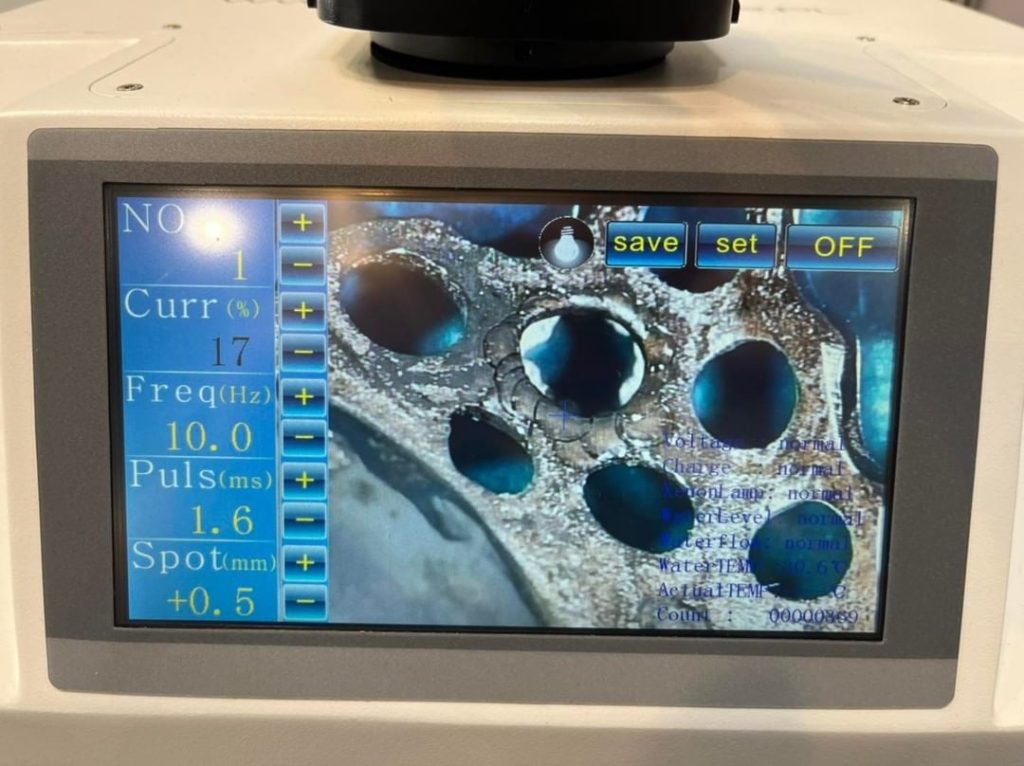
However, there is no universal combination of watts, pulse duration, spot diameter, and argon flow that guarantees damage-free welding.
The correct parameters depend on the machine, joint size, gold layer, core composition, and required fusion.
Pulse Energy and Pulse Width
Pulse energy influences how much material melts during each laser pulse.
Too little energy may leave a weak or incomplete joint.
Too much can cause craters, spatter, or exposure of the base-metal core.
Pulse width also affects the way energy is delivered to the joint.
A shorter pulse is not automatically safer because pulse shape and peak power influence the resulting weld.
Similarly, a longer pulse does not always mean deeper or stronger fusion.
For gold-filled material, begin with an appropriate conservative manufacturer preset and evaluate the result on matching scrap.
Increase energy only when testing shows that additional fusion is required.
Spot Size and Pulse Frequency
Spot size controls how concentrated the laser energy becomes.
A small spot can provide precise targeting, but excessive energy concentration may burn through delicate wire.
A larger spot spreads energy over a broader area, potentially reducing penetration if the other settings remain unchanged.
Choose a spot suited to the actual joint rather than automatically selecting the smallest available diameter.
Pulse frequency controls how quickly welding pulses repeat.
Multiple pulses placed on the same small area can accumulate heat and enlarge the affected region.
For delicate gold-filled components, use controlled individual welds and inspect the result before adding more energy.
Does Argon Prevent Gold-Layer Damage?
Argon can reduce atmospheric oxidation during welding when used with a suitable shielding arrangement.
It may help improve the cleanliness and appearance of the weld.
However, argon cannot prevent base-metal exposure if the laser melts through the gold layer.
Use the shielding gas and flow recommended for the specific jewelry laser welding machine.
Do not assume a fixed gas-flow value is appropriate for every microscope welding system or nozzle.
Why Fixed Wattage Recommendations Are Misleading
A recommendation such as “25W is safe, but 60W burns through” is incomplete without knowing how those values are measured.
A laser's average output power is not the same as the energy delivered by each individual pulse.
The machine's pulse duration, peak-power behavior, repetition rate, and control system also influence the result.
Two machines displaying similar wattage values can produce different welds.
For this reason, a precise-looking power chart cannot replace testing on the actual machine and gold-filled material.
Successful settings should be defined by acceptable fusion and limited surface damage, not by one wattage number copied from another welder.

4. How Do You Test and Inspect a Gold-Filled Weld?
Before accepting a gold-filled jewelry repair, inspect both its appearance and mechanical condition.
A small weld mark may be cosmetically acceptable to one customer but unacceptable to another.
The repair should be evaluated accordingly.
Test on Matching Material
Use gold-filled scrap that matches the actual component as closely as possible.
The test should use a similar gold karat, wire gauge or wall thickness, and base-metal construction.
A practical procedure is:
Identify the material. Confirm the gold-filled marking and inspect the original condition of the gold surface.
Prepare the joint. Clean away oil and polishing residue, then align the components without unnecessary gaps.
Run a controlled test. Use the manufacturer's recommended settings and change one parameter at a time.
Inspect the weld. Look for fusion, cratering, discoloration, exposed core metal, and damage to adjacent surfaces.
Check durability. Evaluate the joint using a test appropriate to the component and its intended use.
Do not repeatedly fire pulses onto an already damaged area in an attempt to conceal an exposed core.
Once the surrounding gold layer has been lost, additional welding may make the cosmetic result worse.
Inspect for Surface and Joint Defects
The inspection should address two separate questions.
Is the joint mechanically sound?
A smooth surface does not necessarily mean that the metal has fused properly.
For a chain or connector, check alignment, articulation, and strength using an appropriate method before returning it to the customer.
Is the appearance acceptable?
Examine the repair under magnification.
Look for exposed yellow or reddish base metal, dark spots, rough areas, pits, and color differences after cleaning.
Even a satisfactory initial appearance should not be presented as a guarantee against future discoloration when the base metal may be exposed.
When Should You Recommend Replacement?
Replacement is usually the more practical choice when the gold-filled layer is already heavily worn, the core is exposed across a large area, or the damaged joint cannot be repaired without creating an unacceptable visible mark.
For simple connectors, replacing a gold-filled jump ring with a suitable solid-gold component may solve the problem more effectively than repeated welding.
For extensive ring or clasp damage, replacing the original component may provide better value and durability.
Before working on a customer's jewelry, explain that laser welding can limit the affected area but may still leave a visible or potentially tarnishing weld mark.
Choosing a Jewelry Laser Welder
If your workshop regularly repairs delicate jewelry, choose equipment with adjustable pulse energy, pulse width, and spot size, along with suitable microscope visibility and working-area access.
A laser welder for jewelry repair can help operators target small joints while limiting unnecessary heating of surrounding metal.
However, machine specifications alone cannot confirm that a particular gold-filled repair will succeed.
Ask the supplier to demonstrate welding on representative gold-filled chain or connector samples.
Inspect the resulting weld for fusion, exposed core metal, and surface appearance before deciding whether the machine meets your application requirements.
Conclusion
Can you laser weld gold-filled jewelry without damaging the surface?
Some localized repairs are possible, but a completely unchanged gold surface at the weld point cannot be guaranteed.
Unlike solid gold, gold-filled jewelry contains an outer gold-alloy layer bonded to a different metal underneath.
Laser welding can limit the amount of surrounding material affected, but creating a molten joint may expose or mix the core metal.
This can leave a visible mark or cause discoloration during wear.
Small jump rings and selected chain repairs may be worth testing. For highly visible connections, a compatible solid-gold jump ring may provide a better cosmetic result.
For badly damaged clasps, heavily worn components, or extensive ring repairs, replacement may be preferable.
The best approach is to inspect the construction, use controlled laser settings, test matching material, and evaluate both the strength and appearance of the repair.
For professional goldsmiths and repair workshops, a controllable jewelry welder can support a wide range of precision repairs, including work on gold, silver, and platinum.
Our team can help review the application, discuss suitable equipment configurations, and determine whether sample welding is practical before you select a machine.