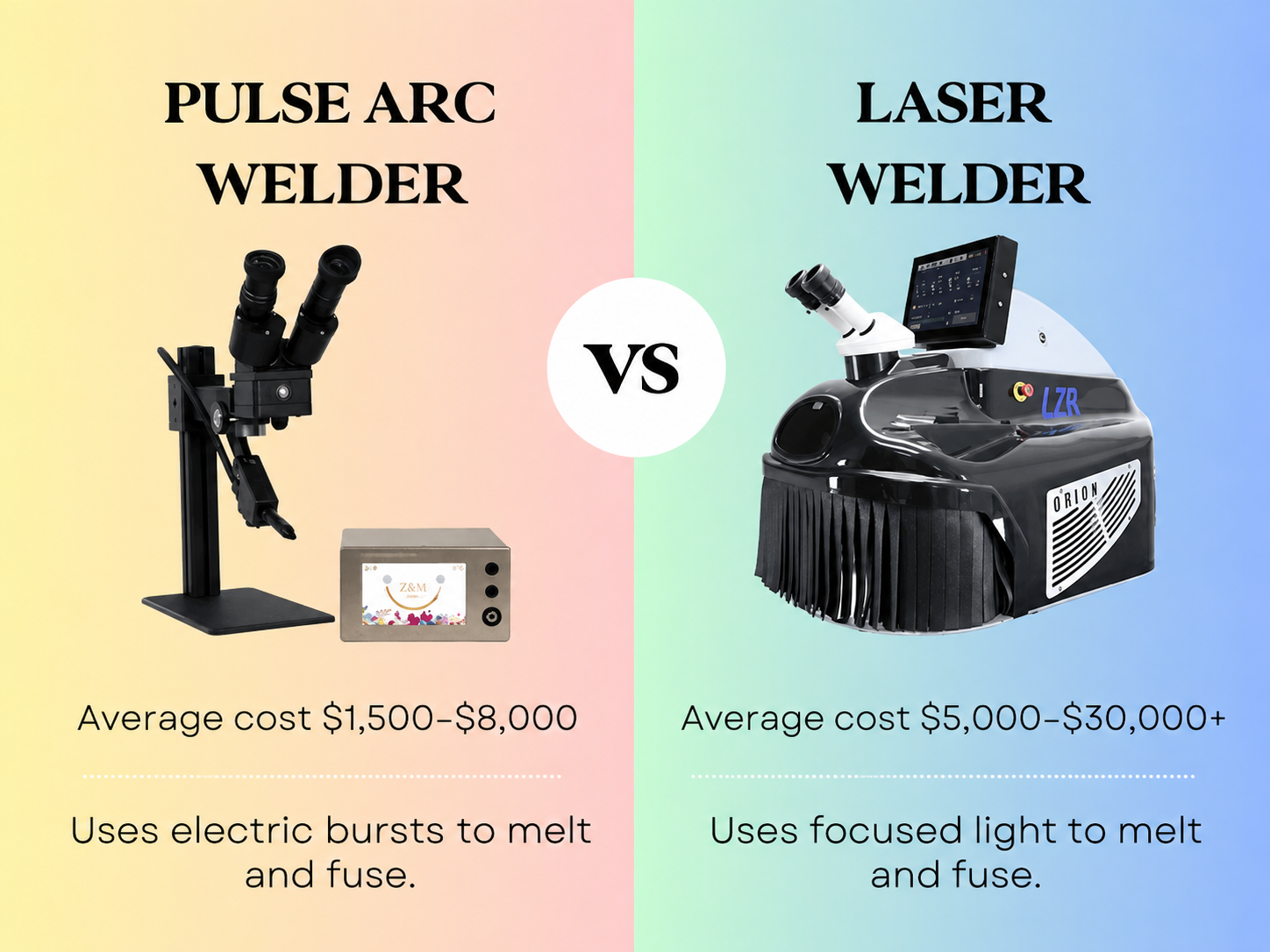
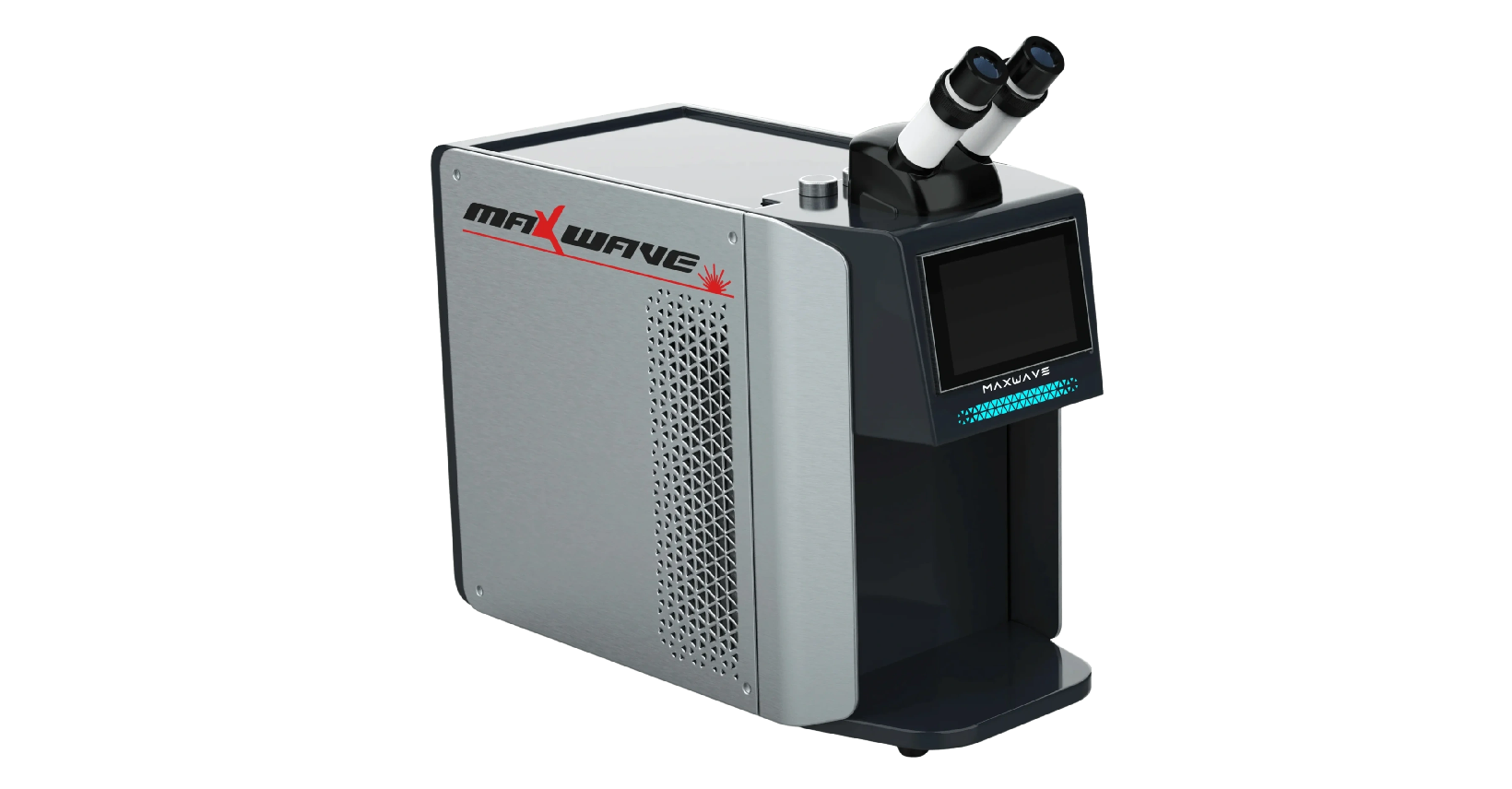
A jewelry laser welder can weld most of the precious metals commonly found on a professional jewelry repair bench, including gold, silver, platinum and palladium.
But these metals do not behave the same way under a laser.
Gold is generally forgiving, but yellow, white and rose gold require different parameter adjustments. Silver reflects laser energy and conducts heat very efficiently, making it more demanding. Platinum requires strong, controlled energy for heavier sections. Palladium can weld very well, but alloy composition and shielding deserve more attention.
That means the real question is not simply:
“Can this machine weld gold, silver, platinum and palladium?”
It is:
“Can the machine give me enough control to weld all four consistently across the repairs my workshop actually performs?”
A professional jewelry laser welder should therefore offer adjustable pulse energy, pulse width and spot size rather than relying on one preset for every precious metal.
Current professional jewelry systems commonly support gold, silver and platinum, while some platforms—including JewelryLaserNova's M3 and Elettrolaser's jewelry systems—also explicitly include palladium among their compatible metals.
Which Jewelry Metals Can Be Laser Welded?
Here is the practical comparison:
Metal | Laser Weldability | Main Challenge | Common Jewelry Work |
|---|---|---|---|
Gold | Excellent | Different karats and alloy colors respond differently | Ring sizing, chains, prongs, porosity, assembly |
Silver | Very good with a capable machine | High reflectivity and thermal conductivity | Sterling rings, chains, clasps, repairs |
Platinum | Excellent | High melting point and heavier sections need more energy reserve | Prongs, ring sizing, luxury repair |
Palladium | Excellent on suitable alloys | Alloy variation and oxidation control | Rings, settings, premium white-metal jewelry |
The important word here is control.
A machine may technically melt all four metals but still be frustrating on silver if peak pulse capability is weak, or difficult on fine gold work if the spot cannot be adjusted small enough.
So metal compatibility should be evaluated from the actual repair result rather than from a simple “all metals supported” statement.
Gold: The Most Common Jewelry Laser Welding Metal
Gold is one of the strongest applications for a laser welder for jewelry.
Professional jewelry lasers are commonly used for yellow gold, white gold and rose gold repairs across multiple karats, including everyday 10K and 14K jewelry as well as higher-purity 18K, 22K and 24K pieces.
However, “gold” is not one welding condition.
A 14K yellow gold ring contains a different alloy mix from a 14K rose gold ring, even though both contain the same proportion of pure gold. White gold may contain nickel, palladium or other alloying elements, while rose gold contains a higher proportion of copper.
Those differences affect how the weld pool forms and how the finished repair behaves. The original article correctly points out that gold color is not merely cosmetic—the underlying alloy changes as well.
For a jeweler, this matters most when switching between jobs.
A normal repair day might involve:
A 14K yellow gold ring sizing.
An 18K white gold prong.
A rose gold chain.
A high-karat pendant.
You should expect to adjust the laser rather than use the exact same parameters for every piece.
Gold laser welding is especially useful for ring sizing, prong rebuilding, chain repair, porosity filling, custom assembly and repairs where limiting heat around the rest of the jewelry is valuable. JewelryLaserNova currently demonstrates its systems for gold ring, prong and chain applications alongside silver and platinum work.
Bottom line: Gold is normally one of the easiest and most important metals for a professional jewelry laser welder, but the machine should have enough parameter control to accommodate different karats and alloy colors.
Silver: Weldable, but More Demanding
Silver is absolutely laser weldable, but it is often the metal that exposes the limitations of an underpowered or poorly controlled machine.
The reason is its combination of high reflectivity and high thermal conductivity.
Some of the incoming laser energy can be reflected, while heat that does enter the material spreads quickly away from the weld zone.
That can make sterling silver more demanding than gold, particularly when the machine has limited pulse-energy reserve.
925 sterling silver is the most important silver alloy for most jewelry repair shops. Fine silver can also be welded, although its softness and different physical behavior mean it should not automatically be treated like sterling.
The practical lesson is not that silver requires one universal higher-power setting.
It is that the jewelry welding machine needs enough adjustment range to establish and maintain a stable weld pool on reflective material.
This is why silver is one of the best samples to send a supplier before purchasing.
If you mainly repair gold, almost every competent jewelry laser may look good in a demonstration.
Ask the same supplier to weld a thin sterling chain, a silver ring and a heavier sterling section. That will tell you much more about the usable performance range of the machine.
Professional jewelry lasers from several current manufacturers explicitly support silver alongside gold and platinum.
Bottom line: Silver is very suitable for laser welding when the machine has sufficient pulse control and energy reserve. If silver represents a significant part of your repair business, test it before buying.
Platinum: Excellent for High-Value Precision Repair
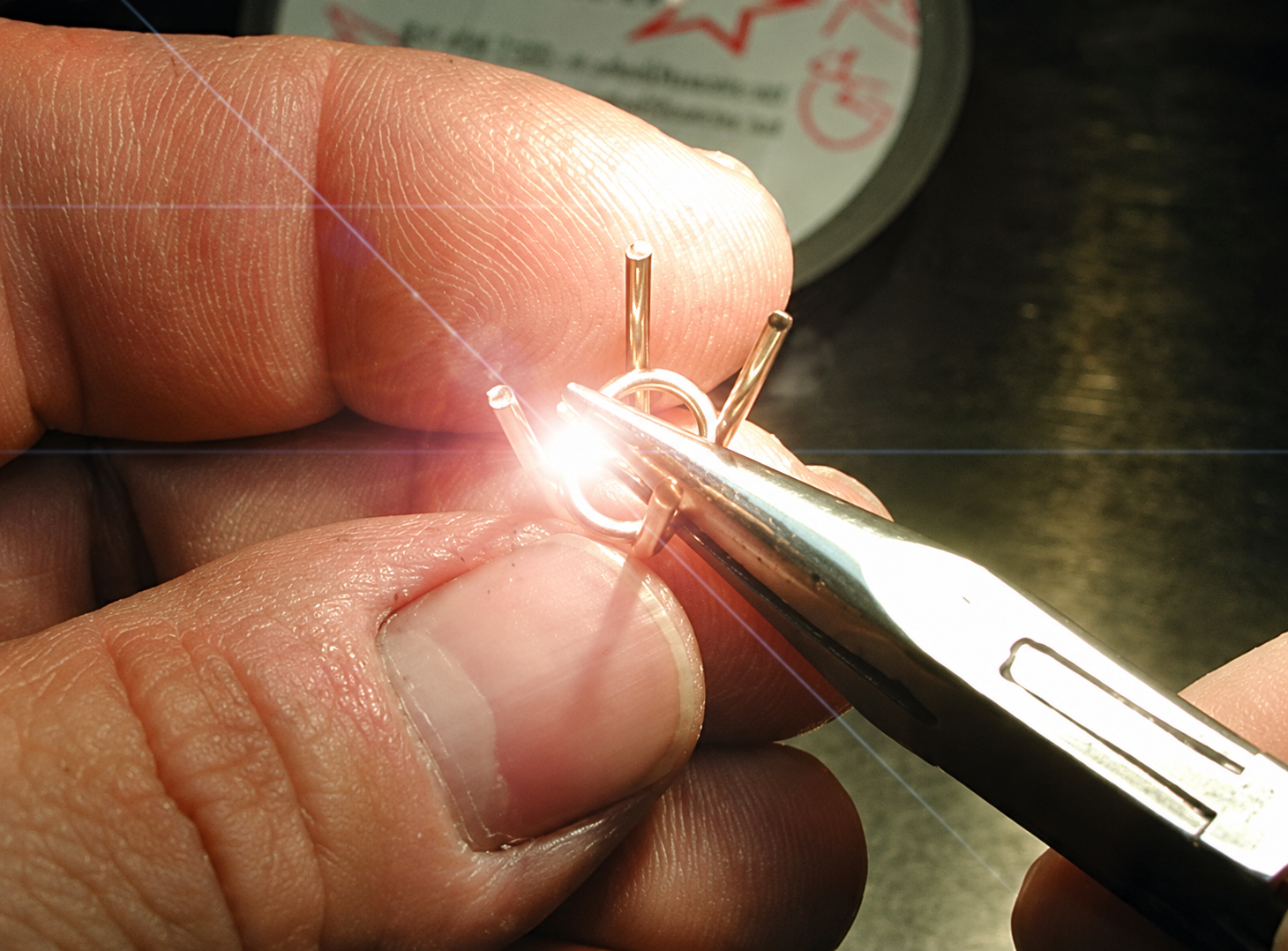
Platinum is one of the metals where jewelry laser welding becomes particularly valuable.
Its high melting point and dense structure make traditional heating demanding, especially on expensive rings and stone-set jewelry.
A laser concentrates energy into a small area, allowing jewelers to work on prongs, ring shanks and other localized sections without applying broad torch heat to the entire piece.
The original article correctly identifies platinum prong and ring repair as important high-value applications.
For platinum, machine capability matters more as the section becomes heavier.
Fine prong work and a substantial platinum shank are not the same welding task.
A machine that works comfortably on delicate gold repairs may need significantly more pulse-energy reserve when the workshop regularly handles thicker platinum pieces.
That does not mean you should automatically buy the highest-wattage system available.
It means platinum should be included in your sample-welding test if it represents a meaningful percentage of your work.
For a shop servicing engagement rings, luxury jewelry and high-end stone settings, platinum capability should be treated as a core requirement rather than an optional feature.
Bottom line: Platinum laser welds very well and is one of the strongest reasons professional repair shops invest in laser equipment, particularly for rings, prongs and high-value stone-set pieces.
Palladium: Fully Possible, but Verify the Alloy
Palladium receives less attention than gold, silver and platinum, but it is still an important precious jewelry metal.
Many professional jewelry laser systems can weld palladium, and current machines from both JewelryLaserNova and Elettrolaser explicitly list palladium compatibility.
The challenge is that palladium jewelry is not always the same alloy.
950 palladium is common, but different manufacturers use different alloying elements to improve hardness, casting behavior and color. Those differences can change how the material behaves during welding.
Shielding also deserves attention because oxidation around the weld can affect appearance and finishing.
For shops that regularly repair palladium, the best approach is the same as with silver:
Do not accept “palladium compatible” as sufficient evidence.
Send your actual alloy or representative scrap and ask the supplier to demonstrate a clean, repeatable weld.
Bottom line: Palladium is a legitimate jewelry laser welding material, but alloy identification and sample testing become more important than with routine yellow-gold repair.

Can One Jewelry Laser Welder Handle All Four Metals?
Yes—a properly specified professional machine can cover gold, silver, platinum and palladium from one platform.
The operator does not need a separate laser for each metal.
What changes is the parameter set.
This is why the original article's concept of a metal-settings table is useful, but fixed universal numbers are not.
Actual settings depend on several factors simultaneously:
Metal alloy, part thickness, joint geometry, spot size, filler wire, surface condition and the specific machine's pulse characteristics.
For example, the settings used on a fine 18K chain should not automatically be copied to a thick platinum ring shank simply because both pieces are jewelry.
A capable jewelry laser welding machine should therefore let the operator adjust at least the core welding controls needed to move between delicate and heavier work.
The most useful capabilities include adjustable spot size, pulse width, pulse energy or equivalent output control, repetition rate, microscope or camera positioning, and shielding-gas support where appropriate.
For a full-service jewelry repair shop, the objective should be to cover the repair range, not simply the metal list.
That might include:
Ring resizing and crack repair.
Prong rebuilding.
Chain and clasp repair.
Porosity filling.
Bezel repair.
Stone-set jewelry work.
Custom fabrication.
Watch or small precision components.
One machine that performs all of those jobs reliably on your normal gold, silver, platinum and palladium alloys is much more valuable than a machine with an impressive compatibility list but a narrow usable operating window.
What Other Metals Can Jewelry Laser Welders Handle?
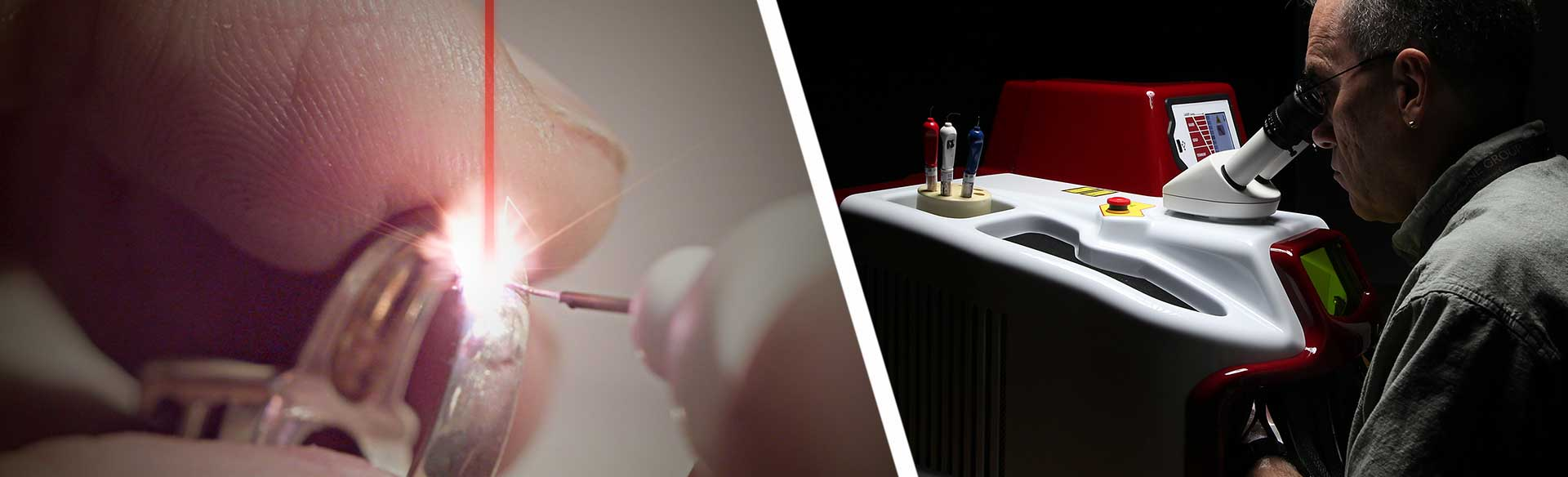
Gold, silver, platinum and palladium are the main focus for a precious-metal repair shop, but they are not the only materials that can be laser welded.
Depending on the machine and application, jewelry laser welders may also work with titanium, stainless steel and selected specialty alloys.
Titanium is common in jewelry, watch components, eyewear and other precision products. It can laser weld very well, but shielding becomes especially important because hot titanium reacts readily with oxygen.
Stainless steel is also widely compatible with laser welding and appears frequently in watches, accessories and small precision components.
Some systems can also process brass, copper or other base-metal alloys, but these should be treated more cautiously because reflectivity, alloy composition and porosity behavior can make results less predictable.
Do not assume that because a machine can weld gold, it will automatically provide equally strong results on every copper-rich or plated alloy.
Plated jewelry creates another challenge.
If the laser penetrates through the surface coating, the underlying base metal becomes part of the weld pool. That can affect color, porosity and the final appearance.
For mixed-metal, plated or unidentified jewelry, sample testing is the safest approach.
What Should You Check Before Buying a Jewelry Laser Welder?
If your workshop regularly handles multiple metals, do not buy from the power number alone.
A 200W machine is not automatically better than a 150W machine for every jewelry shop.
Start with your repair mix.
How much of your work is gold?
How often do you see sterling silver?
Do you service platinum engagement rings?
Do palladium pieces appear often enough to matter?
Do you work with titanium or stainless steel as well?
Then evaluate whether the jewelry welder provides enough control for those jobs.
The most important things to check are:
Adjustable spot size. Fine chain and prong work requires a smaller controlled weld zone than heavier ring sections.
Pulse control. You need enough adjustment range to move between different alloys and thicknesses.
Energy reserve. Silver and heavier platinum work are useful tests of whether the system has sufficient practical capability.
Viewing system. A clear microscope or camera system directly affects positioning accuracy.
Shielding-gas support. This becomes increasingly important for platinum, palladium, titanium and other oxidation-sensitive work.
Cooling stability. Busy repair shops need the machine to remain consistent across repeated jobs rather than only producing one good demonstration weld.
Training and parameter guidance. Switching successfully between four precious metals requires process knowledge as well as hardware.
Most importantly, request sample welding.
A strong supplier should be willing to test your materials rather than only showing prepared demonstration pieces.
For a mixed-metal repair shop, a useful test set would be:
A 14K or 18K gold ring.
A sterling silver chain or ring.
A platinum prong or shank.
A palladium sample if you handle palladium regularly.
That single test tells you more than comparing dozens of specification sheets.
Conclusion
A professional jewelry laser welder can handle gold, silver, platinum and palladium, along with several other metals used in jewelry, watchmaking and precision repair.
But “compatible” does not mean every metal uses the same settings or presents the same difficulty.
Gold is generally highly suitable, although karat and alloy color change welding behavior.
Silver is more demanding because of its reflectivity and thermal conductivity.
Platinum laser welds extremely well but heavier repairs benefit from adequate energy reserve.
Palladium is also highly suitable, but alloy composition and shielding should be verified.
That is why the best laser welder for jewelry is not the machine that simply claims to “weld all metals.”
It is the machine that gives your operator enough control to produce clean, repeatable repairs across the metals your customers actually bring to the bench.
Before buying, send suppliers the same gold, silver, platinum and palladium samples and compare the results.
Look at weld quality, control, finishing required, ease of parameter adjustment and repeatability—not only wattage.
Send JewelryLaserNova your typical repair samples and metal mix. The team can perform real sample welding on gold, silver, platinum or palladium and recommend a configuration based on your repair workload rather than simply recommending the highest-power machine.